About Me
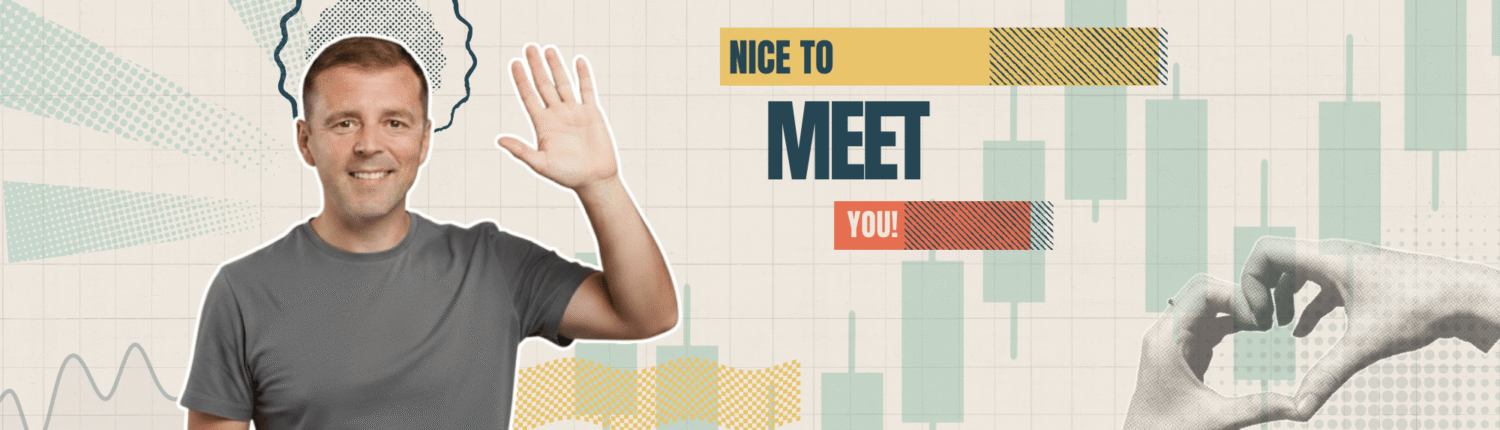
Hey, I’m Paul – and welcome to The Ordinary Trader.
Before I became profitable, I found the whole trading scene overwhelming. Simple concepts were often wrapped in unnecessary complexity, and it was hard to cut through the noise and understand what actually mattered. At the same time, I was put off by the constant hype. The flexing, the screenshots, the promises of effortless success. Too often it felt like the goal was not to teach, but to sell me an expensive mentorship or the idea of getting rich quickly.
This site is for people who recognise that feeling. For those who want clarity over complexity, structure over excitement, and process over promises. If you are looking to approach trading in a calm, deliberate, and honest way, that delivers results, you are in the right place.
If you are looking to approach trading in a calm, deliberate, and honest way, that delivers results, you are in the right place.
This site exists to make the real work visible, and to share what I am learning about trading along the way (both the good and the bad).
I am not interested in hype, shortcuts, or turning trading into some kind of narcissistic performance. What I care about is structure, consistency, and building something sustainable over time.
My philosophy
I believe trading should not be overly complicated or treated like a dark art. It is often made to look mysterious and inaccessible, when in reality it rewards clarity, repetition, and restraint.
I see trading as a profession, closer to a craft than a gamble. Something that can be learned, refined, and executed with care time after time. At its best, it is precise and intentional, with each part serving a clear purpose. Like a well-made mechanical Swiss watch, there is often very little to see on the surface, but a great deal of craftsmanship and precision underneath.
The goal is not excitement or constant action. The goal is to build a process that runs quietly in the background, allowing decisions to be made calmly and consistently over time.
My background and experience
From an early age, I was drawn to building things. I gravitated toward hobbies and interests that were enjoyable, but also had the potential to generate a modest income. I did not have the language for it at the time, but I realise now that I was hustling long before hustle culture became a thing. Experimenting, learning, selling, and refining came naturally to me.
I realise now that I was hustling long before hustle culture became a thing
As I moved into my adult career, that instinct translated into work in startups and growing businesses. I spent years helping companies scale, find product market fit, and build sustainable online growth. Over time, this developed into a career focused on building and leading teams, solving complex problems, and turning early-stage ideas into established businesses.
For the past decade, my work has been centred in marketing software. During that time, I have helped companies scale into global organisations, including businesses that went on to achieve unicorn status with valuations in the billions. I have built and run large international teams across multiple regions, managed complex markets, and been responsible for generating many millions in revenue and profit.
From the outside, it looked like success. And in many ways, it was. But it also came with it’s own cost. The work was demanding and relentless. Long hours, constant travel, and an always-on mindset were expected. Over time, that intensity began to crowd out other parts of life. Health, energy, family time, and simple enjoyment all took a back seat.
At the peak of my corporate career, I was earning a significant six-figure salary alongside substantial quarterly and annual performance bonuses. That financial security gave me the space to start thinking differently about money and how it was earned but also the “value” of non material things harder to measure.
Why I chose trading
Initially, that curiosity took the form of investing on the side. First through funds, then individual stocks. Eventually, it led me to futures markets, which is where my focus sits today.
What drew me to trading was not the promise of fast money, but the structure. Trading is one of the few professions where preparation, decision-making, and outcomes are tightly linked. There is nowhere to hide and no story to spin. The feedback is immediate and honest.
Just as importantly, trading offered flexibility and autonomy that corporate life increasingly did not. The ability to control when I work, how I work, and when I step away. Done properly, it rewards patience, preparation, and discipline rather than constant availability.
I was not looking for excitement. I was looking for a craft that could be practised quietly, refined over time, and built around life rather than at the expense of it.
Why trading should be ordinary
Most people come to trading looking for excitement. Fast moves, big wins, and the feeling that something dramatic is happening. Over time, I learned that this mindset is exactly what makes trading so difficult.
Excitement encourages overtrading. It leads to oversized risk, rushed decisions, and emotional attachment to outcomes. The days that feel intense are often the ones that do the most damage.
The best trading days rarely feel memorable. They are quiet, repetitive, and uneventful. The work is done before the session begins. During the session, the focus is simply on execution. When a trade works, it is expected. When it does not, it is logged and left behind.
This is what I mean by trading should be Ordinary. Not careless or passive, but controlled. Built around routine, structure, and restraint rather than prediction or adrenaline. It is a philosophy that values consistency over brilliance and longevity over excitement.
I have written more about this idea elsewhere, including why boredom is often a sign that things are working as intended.
Trading Strategy and tools
My approach to trading is intentionally simple. I am not interested in complex systems, excessive indicators, or constantly changing methodologies. The goal is not to outsmart the market, but to participate in it with clarity, structure, and defined risk.
At its core, my strategy is built around market structure, liquidity, and context. I focus on understanding where price is likely to react, where risk can be clearly defined, and where patience is required. The specifics matter less than the consistency of execution.
To support that process, I rely heavily on tools that remove decision-making during the session. Chief among them is my Daily Trading Planner. It forces me to define risk, profit targets, trade limits, and stop conditions before a single trade is placed.
Journaling is just as important as the strategy itself. Every session is reviewed, not to dwell on outcomes, but to identify patterns in behaviour. When rules are followed, results tend to take care of themselves. When they are not, the journal makes that visible.
Where to start
If this way of thinking resonates, the best place to start is with the framework rather than the outcomes. Understanding the rules, the constraints, and the process matters far more than any single trade.
From there, you can explore Project 1 Million to see how those rules are applied in real time. The updates are not designed to impress, but to document what consistency actually looks like when it is practised day after day.
If you want something practical to use immediately, the Daily Trading Planner is available to download. It reflects the same principles outlined throughout the site and is the tool I use to plan and review every session.
There is no single right path through the site. Take what is useful, ignore what is not, and apply it in a way that fits your own goals and circumstances.
You are welcome to follow along.
Trade well. Stay ordinary.