
Latest Journal Entry

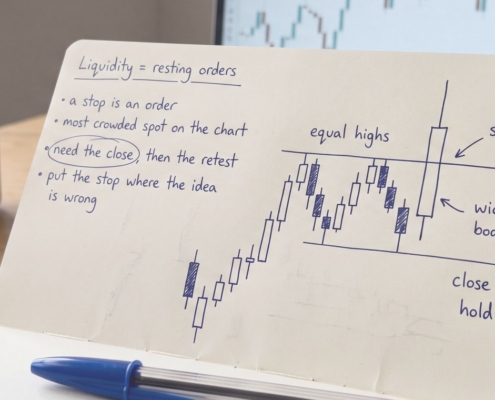
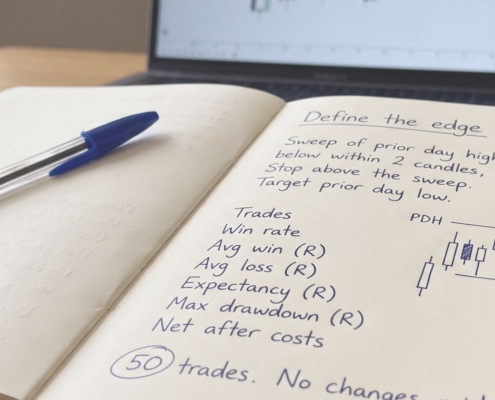
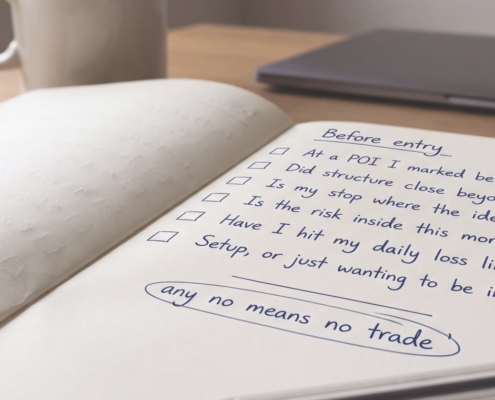
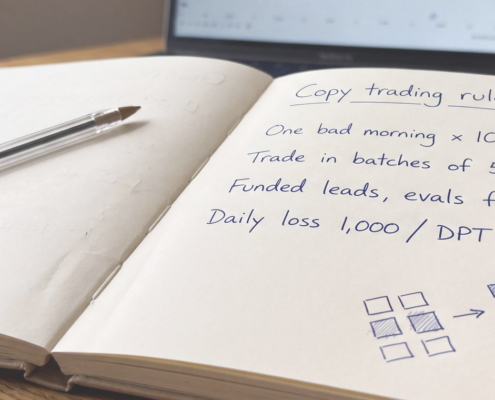
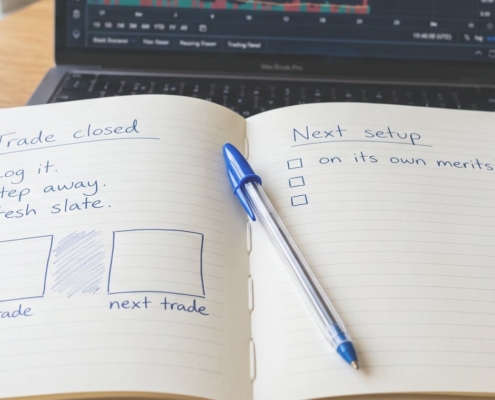
A trading journal listing a reset ritual: log it, step away, fresh slate

Detaching from the last trade so it doesn’t contaminate the next one

Each trade is supposed to stand on its own. But the last one rarely lets go that easily. A loss leaves you either gun-shy or out for revenge, and a win leaves you loose and overconfident. The skill nobody teaches is closing one trade emotionally before you let yourself open the next.

More from the Journal

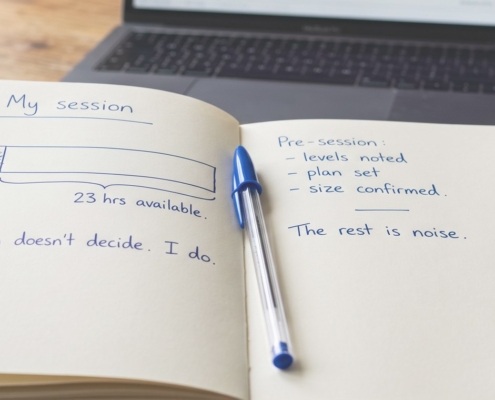
What the new NASDAQ 23-hour trading means for your routine

Nasdaq confirmed 23-hour trading starts 6 December, adding an overnight session from 9pm to 4am ET. The headlines frame it as opportunity. What they don't mention is what it costs to show up for all of it - and whether you should.

NASDAQ Goes 24 Hours. More time, same mistakes?

Nasdaq confirmed 23-hour trading starts in December. The exchange wants to run nearly around the clock. Retail traders have always had access to more market than they can handle. More hours doesn't fix the reasons most of them struggle.
A trading journal reading I'm learning to trade beside a laptop chart on a wooden desk

The quiet damage of telling people you’re a trader before the results back it up

At some point you told people you trade. It felt good to say. But now there is an audience in your head, and every loss is also a small embarrassment. That pressure changes how you trade, and almost never for the better. Sometimes the smartest thing you can do early on is stay quiet.
A trading journal open on a desk with a handwritten note reading grade the process, not the P&L

What it does to you when you tie your self-worth to a green day

A green day should not make you a better person, and a red day should not make you a worse one. But if your mood tracks your P&L that closely, your self-worth is tied to the account. That is a quiet, expensive problem, and it changes how you trade without you noticing.
Handwritten trading notebook showing an early exit marked before the final take profit, with a note reading "should have held"

Why you can’t hold your position to the final TP

You had a final TP. The trade went your way. You closed out the whole position before it got there and watched it carry on regardless. If this sounds familiar, the problem usually isn't discipline. It's the same thing as position sizing — just working in the other direction.

Your nerves are a position size indicator

Most of what gets called a psychology problem is really a sizing problem wearing a disguise. Here's how I think about position size: the one risk lever that decides whether you survive long enough to get good.

Should you trade on the 4th of July?

The US markets stay technically open on the 4th of July. But thin volume, unreliable structure, and the frustration that builds on a slow holiday session make it one of the harder days to trade well. The better question is not whether you can trade. It's whether you should.
Calm wooden desk with three yellow sticky notes reading "Win = data, not proof", "Same size next trade" and "Set the limit first", beside a notebook, blue Bic pen, coffee and a laptop showing a candlestick chart.

Why a big win can wreck you worse than a loss

Most traders brace for the losing days. Almost nobody braces for the winning ones. But a single big win can do more damage to a process than a string of losses, because it arrives disguised as proof that you were right.
A calm wooden trading desk with an open notebook, a blue Bic pen and a defocused candlestick chart on a laptop, beside two yellow sticky notes reading WAIT and CLICK.

Why you freeze on a valid setup but click instantly on a bad one

The clean setup forms and you sit on your hands. Twenty minutes later you're in a trade you can't even justify. The freeze and the click look like opposites, but they're the same problem wearing two masks. Here's what's actually happening, and how to take the moment out of it.
© 2026 The Ordinary Trader Ltd. All rights reserved.
Registered in England and Wales. No. 17144683. 128 City Road, London, United Kingdom, EC1V 2NX