
Latest Journal Entry

Open notebook on a wooden desk with handwritten notes in blue ink: "Daily target: make X a day" crossed out, then "It's not about the money" and a list starting with a circled "1 trade".

It’s not about the money

For years I've had a daily number to hit. Lately it's been the reason I keep trading after I'm already green, and the reason some of those days end red. One phrase made me question whether I was chasing setups at all, or just chasing a figure.

More from the Journal

Why early wins deserve the same caution as losing streaks

An early win feels like permission. The next setup looks a touch better than it should, the size creeps a little, and the day's already going your way. I've started treating a clean morning trade the same way I treat consecutive losses. Step away. Let the moment settle. Come back with the same eyes.

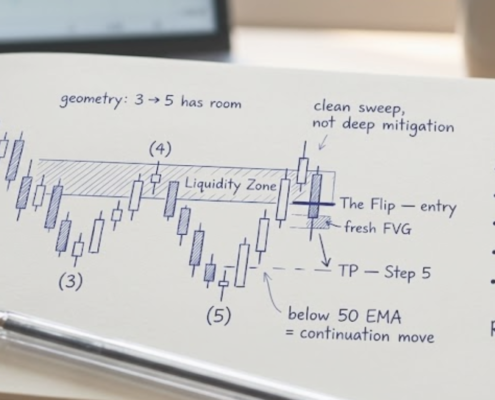
What an A+ Setup Looks Like on the Indicator

Most setups that print on the indicator work often enough. A+ setups are different. They're the ones where geometry, structure, fresh imbalance, and EMA position all stack the same way. Here's how that looked on a recent silver futures trade, and why execution became the easy part.

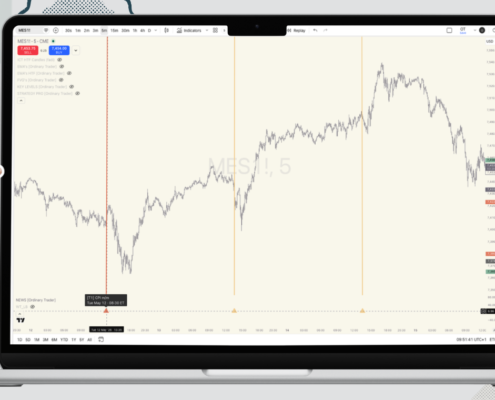
NEWS: A free TradingView indicator for High Impact news events

Most traders have been stopped out by a news event they forgot was coming. NEWS by [Ordinary Trader] is a free TradingView indicator that marks high-impact news events directly on your chart, with optional alerts that fire before each one. Here's what it does, how the tier system works, and why it fits the standing-aside-during-news approach.

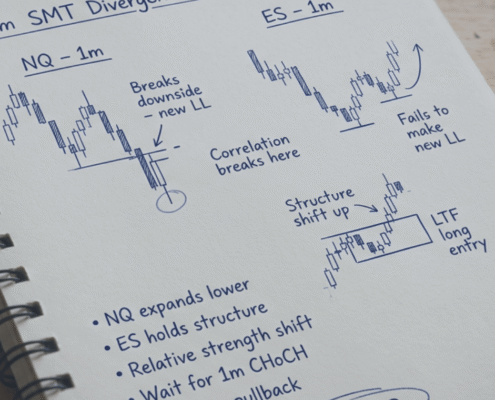
When Correlation Breaks: An example SMT Divergence Setup using NQ and ES

A real trade journal example of SMT divergence using NQ and ES. See how correlation breaks, liquidity shifts, and market structure alignment create high probability setups.

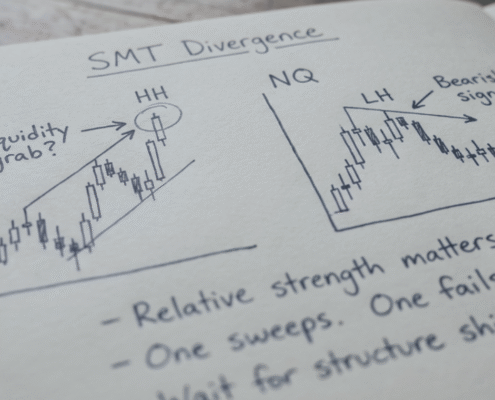
What Is an SMT Divergence And How To Use It With ES And NQ

What is SMT divergence in trading? Learn how to spot SMT divergence between ES and NQ and use it to confirm bias, market structure, and high probability setups.

Which timeframe is the best to trade?

What is the best timeframe to trade? Learn how trading timeframe selection affects market structure, risk management, and consistency across different styles.

Should you take profit or let your trade run?

Take profit or let it run? Learn how different exit strategies impact win rate, risk management, and overall trading performance.

Why your decision-making gets worse as the trading day goes on

There is solid science behind the idea that your ability to make good decisions changes across the day. It is one of the most studied topics in psychology, behavioural economics, and neuroscience. Put simply: The brain has limited self-regulation…

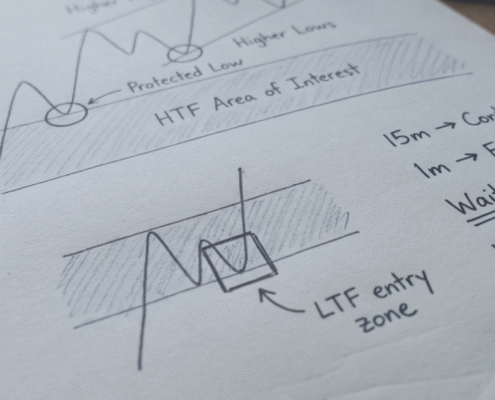
How to become profitable with just market structure

Discover how mastering market structure alone can lead to profitable trading. Learn to read price shifts, identify high-probability setups, and simplify your strategy for consistent results.
© 2026 The Ordinary Trader Ltd. All rights reserved.
Registered in England and Wales. No. 17144683. 128 City Road, London, United Kingdom, EC1V 2NX