Week 11 Recap: Locking in the Gains
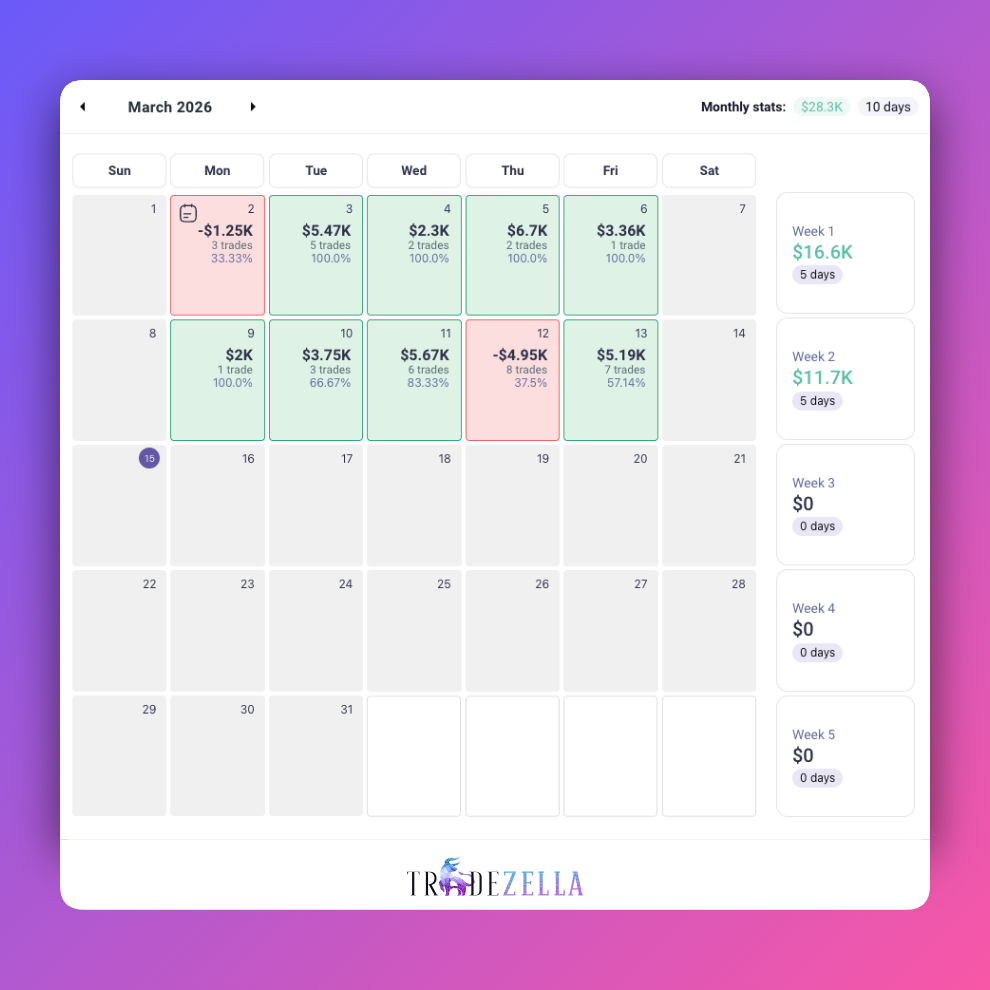
There are some weeks where trading feels unusually clean. Not easy, exactly, but clean. The decisions are clearer. The setups stand out. Losses do not sting in the same way because everything sits inside the process.
Week 11 felt like that.
From Monday through Wednesday, the rhythm was strong. The week started green, stayed calm, and carried that tone through the first half of the session block. By Wednesday, it genuinely felt like things were clicking. Trades were being selected with more care. Marginal setups were passed on without much internal debate. There was less noise, less forcing, less need to be involved in every move.
In other words, I was sticking to the plan.
That showed up in a few obvious ways. There were fewer trades overall. Adherence to the trade planner was better. The early-week win rate was strong. More importantly, losing trades were handled without frustration. They happened, they were accepted, and then the focus returned to the next decision.
That emotional shift matters more than it might seem.
When a strategy has a real edge across a large sample size, individual trades lose a lot of their emotional weight. They still matter, of course, but they stop feeling personal. A loss becomes a business expense rather than a verdict. That was probably the biggest improvement this week. There was less attachment to each outcome and more trust in the process itself.
For the first few days, everything felt controlled. Measured. Ordinary, in the best sense of the word. That kind of trading is rarely dramatic, but it is usually where the best work gets done. It fits closely with the broader philosophy behind The Ordinary Trader: calm, process-led execution without hype or emotional exaggeration.
Discipline is never permanent. It has to be renewed in real time.
The day discipline slipped
Then Thursday arrived and offered a useful reminder: discipline is never permanent. It has to be renewed in real time.
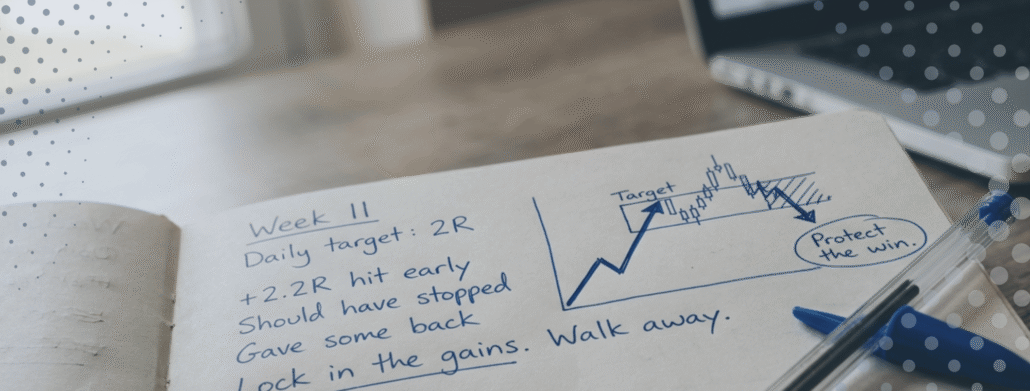
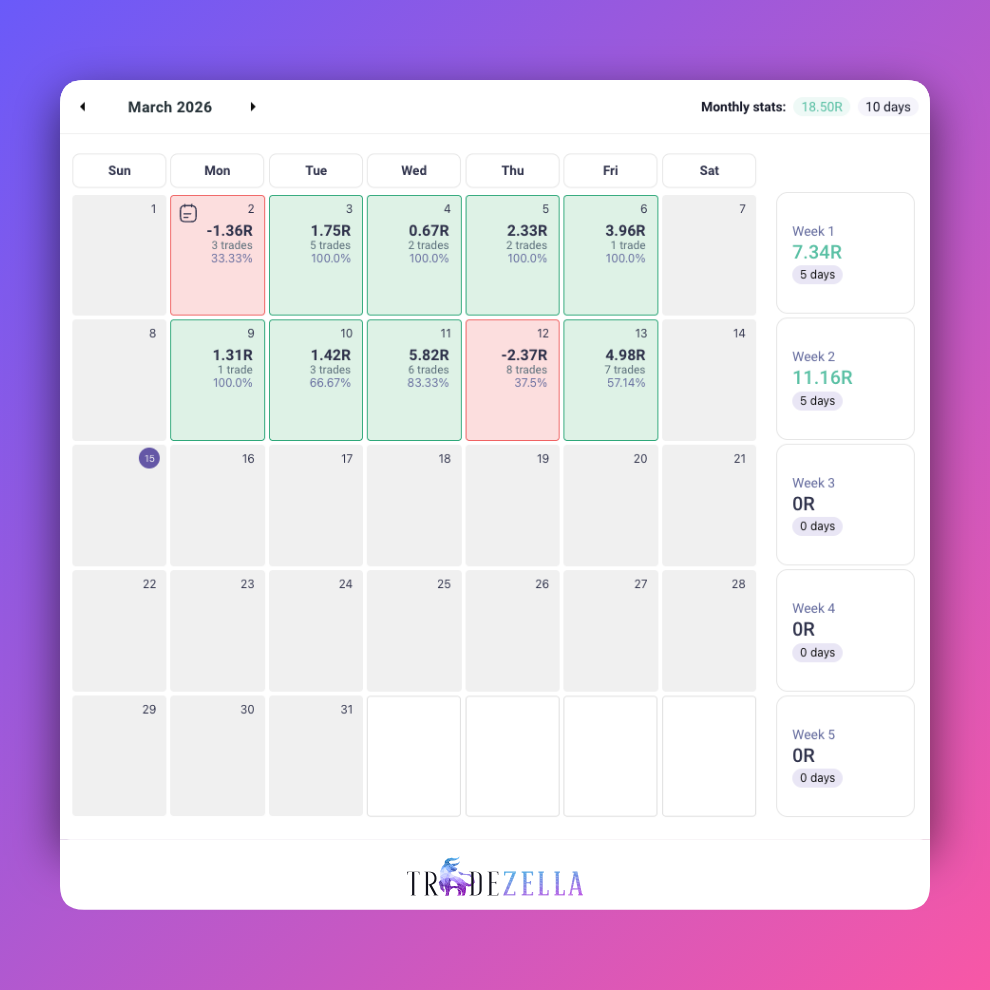
At around 9am, I had taken one trade and was already up +2.2R for the day. My daily target is 2R. So the correct decision was not complicated. The day had done its job. My job was to close the laptop and walk away.
I did not do that.
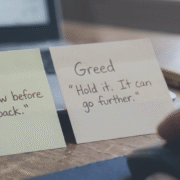
Instead, I started negotiating with myself. There was still plenty of session left. More movement might come. Another good setup could appear. None of that sounds especially reckless on paper, which is partly why this kind of mistake is so common. It rarely arrives as a dramatic impulse. More often, it shows up as a small, reasonable-sounding exception to a rule you already made for yourself.
By the end of the session, I had turned a strong day into -2.37R.
That is a swing of more than 4R in the wrong direction, caused entirely by ignoring the framework that was supposed to protect the day once the target had been met.
That is the frustrating part. Not the loss itself, but how unnecessary it was.
Overconfidence rarely looks loud
While journaling the losses later that day, another pattern became clearer. Some of the decisions were sloppy. Not wildly reckless. Not completely detached from the plan. Just a little looser than they should have been.
That distinction matters.
The biggest trading mistakes are not always explosive. Sometimes they are subtle. A setup that is almost good enough. A management decision that is almost justified. A trade that gets taken not because it is clearly there, but because you have been in rhythm all week and quietly start to trust yourself a little too much.
That was probably the real issue on Thursday: overconfidence.
After several green days and a strong win streak, there was likely a slight relaxation in standards. Nothing dramatic. Just enough to matter. And in trading, just enough to matter is more than enough to do damage.
Honestly, that is one of the stranger parts of this work. Good performance can create its own risk. When you have been seeing the market well, the temptation is to believe that the next decision will also be sharp. But markets do not reward confidence on its own. They reward discipline, and discipline often means stopping while you still feel good.
Friday’s reset: protect the week
Friday felt different. Not because the market was easier, but because the lesson from Thursday was still close enough to shape the decisions.
Two strong trades appeared and both delivered more than 3R. In another mood, there might have been a temptation to squeeze more from them, trail more aggressively, and try to extract every last bit of movement available. And yes, in hindsight, they may have gone further.
But that was not the point.
After what happened the day before, the better decision was to lock in the profits and close the laptop.
Sometimes protecting the week matters more than maximising the day.
That can feel slightly unsatisfying in the moment. Traders are conditioned to think in terms of missed potential. Could it have run further? Could more have been made? Maybe. But that line of thinking is not always helpful. A well-managed green day does not become a bad one simply because a market moved further after you exited.
There is a lot of freedom in accepting that.
The real lesson from Week 11
Week 11 closed at +11.16R, which is super encouraging. But the most useful takeaway had very little to do with entries, analysis, or market reads.
It was about protecting gains.
Growing a trading account is not only about finding winning trades. It is about keeping the money when it is made. It is about refusing to turn good days into average ones, and average ones into red ones. It is about letting the positive asymmetry work in your favour over time.
That is not flashy, but it is the work.
Minimise losses. Protect gains. Let the edge compound.
The equity curve becomes more stable when losses stay contained and green days are allowed to remain green. Not every opportunity needs to be taken. Not every move needs to be captured. And not every strong day needs to be pushed further.
That last part is easy to forget. A lot of trading advice focuses on pressing advantage, scaling up, or making the most of momentum. There is a place for that. But there is also a quieter skill that matters just as much: knowing when enough is enough.
That was the lesson this week.
Not how to chase more, but how to keep what was already earned.
Minimise losses. Protect gains. Let the edge compound.
Trade well. Stay ordinary.