
Latest Journal Entry

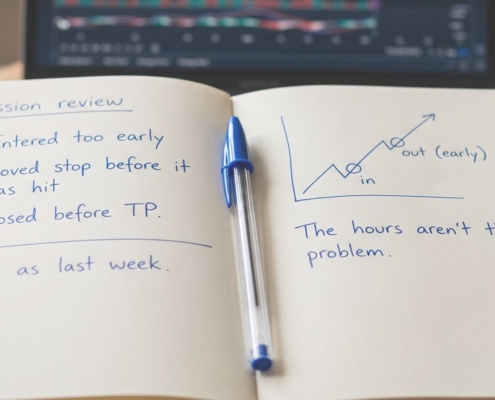
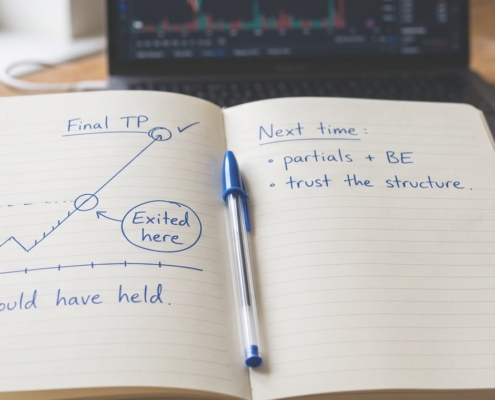
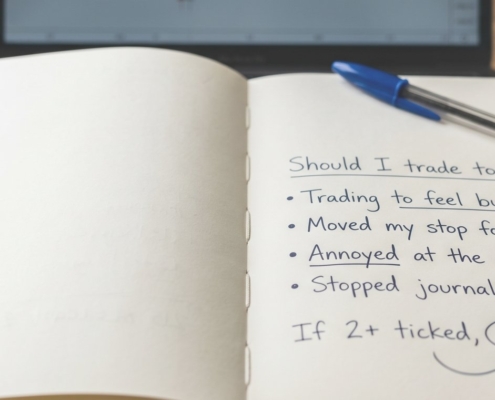
Handwritten trading notebook showing an early exit marked before the final take profit, with a note reading "should have held"

Why you can’t hold your position to the final TP

You had a final TP. The trade went your way. You closed out the whole position before it got there and watched it carry on regardless. If this sounds familiar, the problem usually isn't discipline. It's the same thing as position sizing — just working in the other direction.

More from the Journal

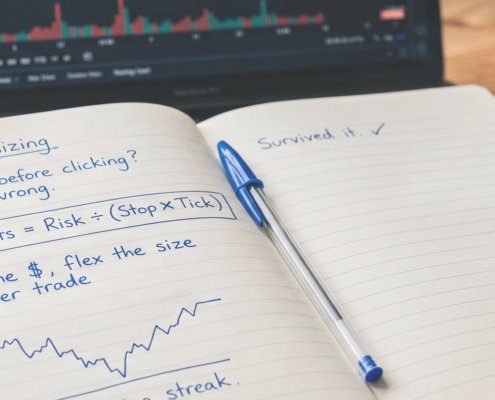
How I journal my trades, and why the notes matter more than the numbers

The trade is logged, the result is there, but by the next morning you can't remember what you were actually thinking when you moved the stop. That gap is the reason I journal the notes, not just the stats. Here's the three-part template I keep open on screen, and how I use it live.
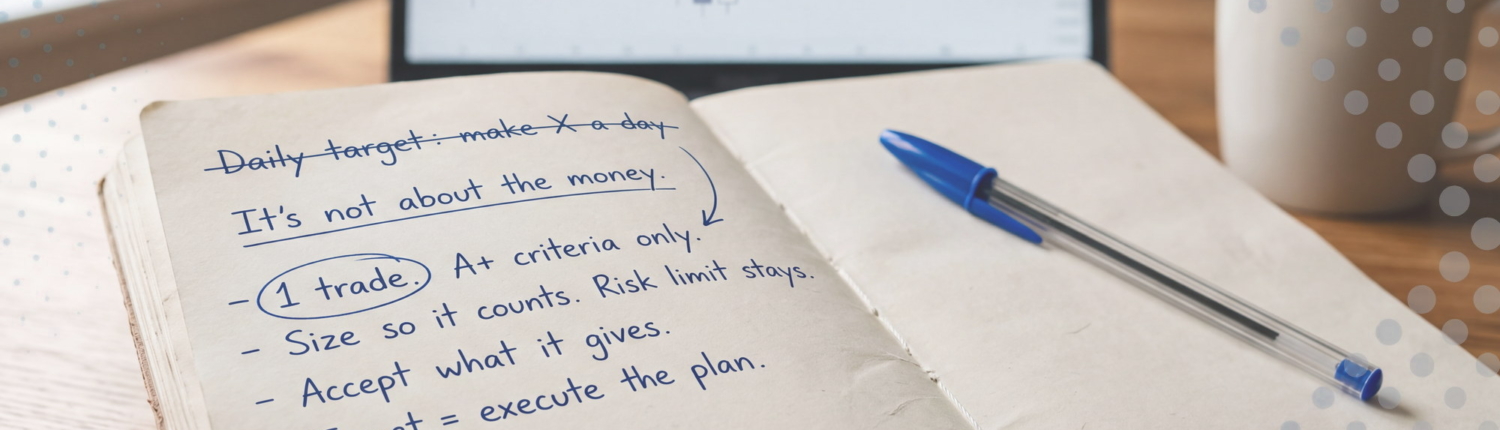
Handwritten trading journal comparing two columns of four trades with identical R outcomes: sized the same it nets +1R and +$500, with sizing drifting it nets +1R but -$1,050, under the note risk the same 1% every trade.

Why position sizing could be turning your green days red

You can win more trades than you lose, follow your plan, and still close the day in the red. Usually it isn't your analysis that did the damage. It's sizing the losers big and the winners small, so the dollars and the R end up telling two different stories.

The two filters in the STRATEGY indicator – what’s the difference?

Two filters in the STRATEGY indicator both lean on EMAs, so it's easy to assume they do the same job. They don't. One judges where a single setup stage sits against a moving average. The other reads the higher-timeframe trend from two. Same building block, very different purposes.
Hand-drawn pen chart: a bullish move from entry to +2R with 90% locked and the last 10% to TP circled as 'the most expensive 10%', with a 9R risk to 1R reward note.

When is enough profit enough?

There's a moment in every winning trade where you stop watching the chart and start willing it forward. You're 2R up, almost at target, and then the candles swing back. This isn't about your daily profit target. It's about the harder question, the one you ask mid-trade.

The hidden costs of trading micros

Take a trade on 20 MES, make $600 gross, and you might assume that's $600 in your account. It isn't. Once commission, exchange fees, and clearing costs come out, the real number is closer to $525. Here's the maths, and what it means for traders running size in micros.

Why early wins deserve the same caution as losing streaks

An early win feels like permission. The next setup looks a touch better than it should, the size creeps a little, and the day's already going your way. I've started treating a clean morning trade the same way I treat consecutive losses. Step away. Let the moment settle. Come back with the same eyes.

What an A+ Setup Looks Like on the Indicator

Most setups that print on the indicator work often enough. A+ setups are different. They're the ones where geometry, structure, fresh imbalance, and EMA position all stack the same way. Here's how that looked on a recent silver futures trade, and why execution became the easy part.

NEWS: A free TradingView indicator for High Impact news events

Most traders have been stopped out by a news event they forgot was coming. NEWS by [Ordinary Trader] is a free TradingView indicator that marks high-impact news events directly on your chart, with optional alerts that fire before each one. Here's what it does, how the tier system works, and why it fits the standing-aside-during-news approach.

When Correlation Breaks: An example SMT Divergence Setup using NQ and ES

A real trade journal example of SMT divergence using NQ and ES. See how correlation breaks, liquidity shifts, and market structure alignment create high probability setups.
© 2026 The Ordinary Trader Ltd. All rights reserved.
Registered in England and Wales. No. 17144683. 128 City Road, London, United Kingdom, EC1V 2NX