NASDAQ Goes 24 Hours. More time, same mistakes?
Nasdaq confirmed this week that it will extend to 23-hour trading from 6 December, adding an overnight session from 9pm to 4am ET. NYSE already has SEC approval for a 22-hour day. CBOE is thinking about it too. The message from the exchanges is consistent: the market wants to run continuously, and the infrastructure is catching up.
The pitch from Nasdaq’s president is that this will “broaden investor access and expand wealth-building opportunities.” That framing deserves some scrutiny.
Because the assumption buried inside it is that access has been the problem. That retail traders have been sitting at the edge of opportunity, frustrated, waiting for the window to open. And that once it does, everything changes.
That’s not what the data on retail trading suggests. And it’s not what most traders experience honestly.
the reason people cycle through strategies and platforms and brokers – has never been that the market wasn’t open long enough.
Access was never the constraint
Here’s the thing: retail traders already have access to more market than they can trade well.
NQ futures run nearly 23 hours. Forex never closes. Crypto genuinely doesn’t sleep. The problem for the vast majority of retail traders – the reason the loss rates are what they are, the reason most accounts don’t grow, the reason people cycle through strategies and platforms and brokers – has never been that the market wasn’t open long enough.
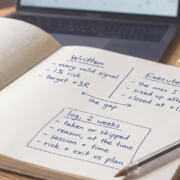
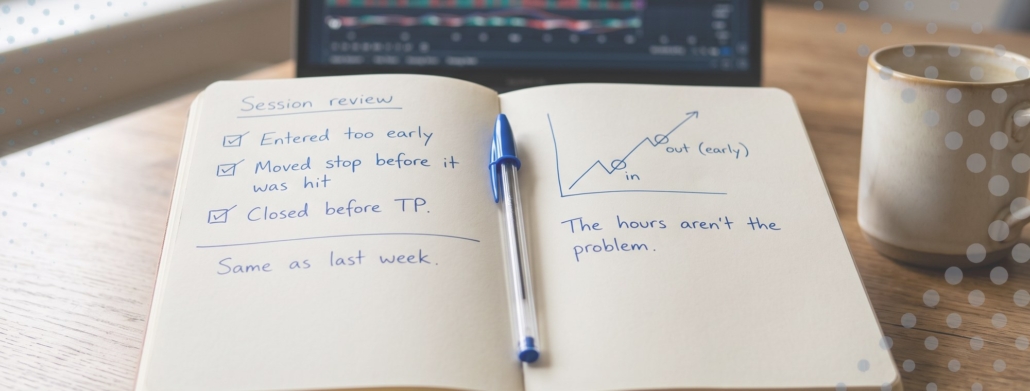
It’s been execution. Risk management. Discipline. The ability to sit on your hands when there’s no setup. The ability to close a losing trade before it becomes an account-threatening one. The ability to follow a plan written before the session rather than the one written by emotion during it.
None of that improves because Nasdaq added seven hours to its schedule.
More hours is more noise
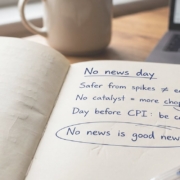
Every additional hour of a trading session is another hour of price action that needs to be filtered, assessed, and mostly ignored. The setups that meet every condition of a solid process are rare. That’s by design. A high-quality process produces few entries, not many.
The traders who struggle most with this aren’t the ones who haven’t found the right strategy. They’re the ones who can’t sit still. Who read inactivity as missed opportunity. Who treat every move the market makes as something that needs a response.
Extended hours won’t cure that. They’ll feed it. More candles, more movement, more moments where it looks like something is happening and the instinct says you should be in it. The always-on market is the ideal environment for overtrading, and overtrading is already one of the most reliable ways to drain an account slowly.
FOMO at scale
The psychological case for limiting your session is straightforward. A session you’ve prepared for, with levels identified, a plan in place, and a clear set of conditions for entry, is a session you can execute with some discipline. A session that runs for 23 hours is one where the conditions that justify trading are available for a fraction of the day, and everything else is noise you have to learn to ignore.
Most traders already struggle with FOMO in a six-and-a-half-hour window. Give the same trader 23 hours and you haven’t expanded their opportunity. You’ve expanded their exposure to the psychological pressure that already causes most of their problems.
The market open has its quirks. The first 30 minutes after the US open produces most of the volatility, most of the false breakouts, most of the traps for traders who haven’t done their preparation and are reacting to what they see rather than trading what they planned. The London open has its own behaviour. The overnight session, when it launches, will have its own characteristics – and those characteristics will take months to understand, probably longer.
Trading a new session before you understand how it moves is speculation, not process.
Most traders already struggle with FOMO in a six-and-a-half-hour window.
The mistake doesn’t change with the hours
What’s worth saying plainly is this: the reasons retail traders struggle are documented well enough. Overtrading, undersizing winners and oversizing losers, abandoning the plan mid-trade, chasing after losses, trading without preparation. These patterns appear across instruments, sessions, and market conditions.
They appear in bull markets and bear markets. They appear in volatile conditions and slow ones. They appear whether the exchange is open for six hours or twenty-three.
The opportunity to make better decisions is already inside your existing session. More often than not, the trades that should be taken are clear. The ones that shouldn’t are clear too – in hindsight, at least, once the position is closed at a loss.
The work is making that clarity available before the trade. Not after.
The edge has never been about being in the market the most.
What doesn’t change
Nasdaq’s 23-hour schedule is interesting news. The geopolitical argument for it is real – markets have repeatedly been caught closed when significant events happened overnight, and the demand for pricing in real time is legitimate. For certain categories of investor and institution, the extension solves an actual problem.
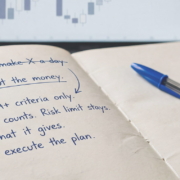
For the retail trader working on their process, it changes almost nothing. The edge has never been about being in the market the most. It’s been about being in the right trade, at the right time, sized correctly, with a defined exit.
You can do all of that in a two-hour window, if the conditions are right. You can fail to do all of it across twenty-three hours too.
Trade well. Stay ordinary.