Trading should be Ordinary
Trading Should Be Ordinary
There is a quiet misconception at the heart of modern trading culture. Many people arrive at the markets searching for something different from ordinary life. They want fast moves, big wins, and the rush of adrenaline that comes from watching price surge in their favour. Trading is marketed as excitement. As freedom. As a shortcut to something extraordinary.
That expectation does more damage than most beginners realise.
Because the moment trading feels exciting, something has usually already gone wrong.
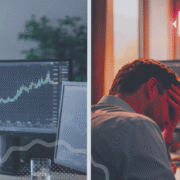
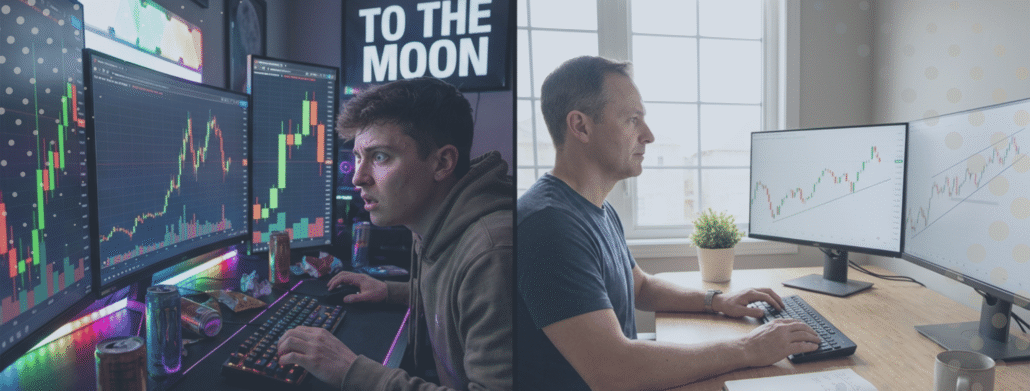
In the early stages, excitement feels harmless. You place a trade and price starts moving quickly. Your heart rate rises. A win feels incredible. A loss feels personal. The emotional swing creates the illusion of engagement. It feels like focus. It feels like intensity.
But it is neither.
It is noise.
Excitement does not sharpen decision making. It distorts it. Under its influence, traders begin to deviate from plans they carefully built when calm. They hold positions longer than their rules allow. They increase size without fully acknowledging the added risk. They take setups that do not meet their usual standards.
the moment trading feels exciting, something has usually already gone wrong.
Nothing about the strategy changed. Only the feeling did.
And feelings are unreliable risk managers.
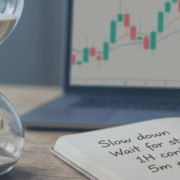
The traders who endure for years tend to describe their sessions very differently. There is no drama in their routine. No rush. No theatre. They sit down at the same time each day. They review the same markets. They execute within the same framework. Most trading days look remarkably similar to the one before.
To an outsider, it can seem repetitive. Even dull.
It is not a lack of passion. It is professionalism.
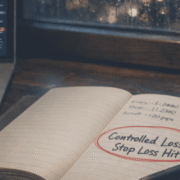
When a trade works, there is no surge of triumph. The outcome was always part of the statistical expectation. When a trade fails, it is recorded, reviewed, and filed away. There is no spiral of frustration and no grand story attached to it. It is simply another data point in a long series.
This emotional neutrality is not accidental. It is cultivated.
Excitement is expensive in trading. It encourages impatience. It fuels reactive decisions. It creates the illusion that this trade, right now, is more important than the next hundred that will follow. It convinces you that you must act, that you must participate, that you must prove something.
You do not.
Consistency in trading is not built on intensity. It is built on repetition. The same preparation. The same criteria. The same risk management. Over and over again.
From the outside, ordinary trading does not make compelling headlines. There are no dramatic screenshots. No wild equity swings. No visible emotional highs and lows. There is simply process. Structure. Restraint.
But boring is stable.
Boring is repeatable.
Boring is where edge lives.
Trading should not feel like a performance. It is not a game and it is not a test of confidence or intelligence. It is work. Quiet work, done methodically, without seeking emotional stimulation.
Trading should not feel like a performance. It is not a game and it is not a test of confidence or intelligence. It is work. Quiet work, done methodically, without seeking emotional stimulation.
That may sound less glamorous than the promises that pull people into the markets. It is meant to.
Trading should be ordinary.
Not because ordinary is small, but because ordinary is sustainable.
Trade well. Stay ordinary.