Copy trading changes one thing. It multiplies the outcome of your trade.
Every good decision lands on ten accounts instead of one. BUT…. so does every bad one.
When I first connected a trade copier across my prop accounts (I use TradeSyncer btw), the wins felt effortless. Then came the first proper red day, and I watched the same loss print ten times over. Nothing about my trading had changed. Only the exposure had.
Something clicked that day and I realised that taking the trade is the easy part. Managing the exposure around it is the real work. These are the ten rules I’ve settled on to help scale prop accounts when using trade copiers.
1. Go slow and let small wins compound
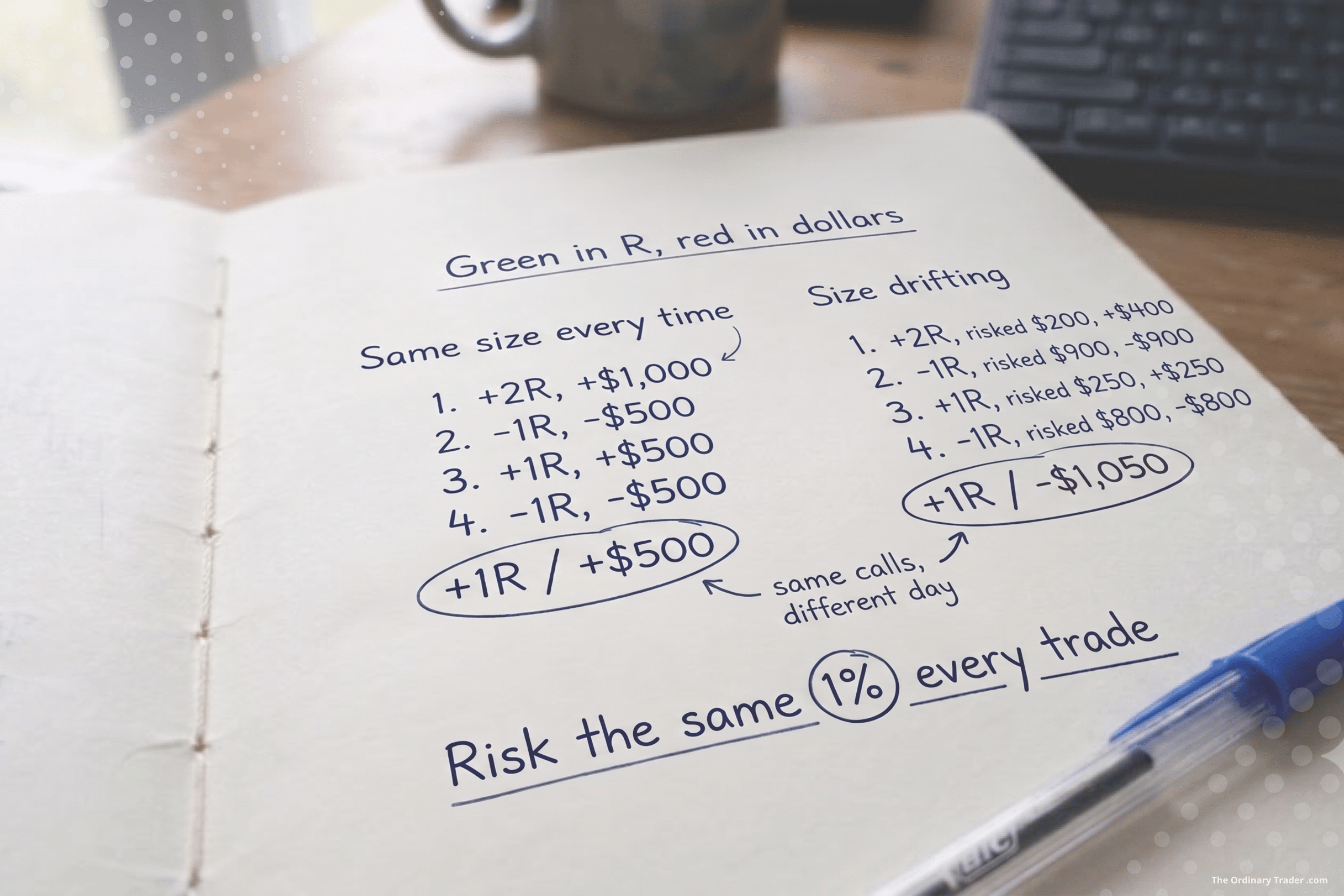
Scaling from one account to ten turns a normal 1R loss into a 10R hit to the book. Big days are great, but the losing days grow at exactly the same rate.
I’d rather bank a steady +1R across a group of accounts, day after day, than chase a big one and hand it back. Small wins compound. Big losses reset the clock.
2. Rotate and segment your accounts
You don’t need to trade every account all of the time. When the market is trending cleanly, running the full book makes sense. In choppy or uncertain conditions, it doesn’t.
I trade in batches of 5 to 10 accounts, take a win, then move to the next batch. Splitting by session works too, with half the accounts on the NY open and half in Asia or London. One bad session can then only touch part of the book.
3. Make a funded account your leader
I set a funded account as the leader and almost forget the evals exist. I trade the funded exactly as I normally would, and the evals follow.
Most eval mistakes come from the pressure of needing to pass. Remove that, trade well, and the evals convert as a by-product rather than the goal.
4. Use ratio multipliers on fresh evals
TradeSyncer lets you set a ratio multiplier on each follower. I’ll sometimes put a fresh eval on 2x, so a $200 risk on the leader becomes $400 on the eval. The funded keeps trading as normal while the eval reaches its outcome faster, pass or fail.
Be honest with yourself here. 2x doubles the losses too. It doesn’t make passing more likely. It makes the answer arrive sooner, which frees up the slot for the next attempt.
5. Build a bench of backup evals
Once a funded account has paid out, I start thinking about its replacement. Lucid allows five funded accounts at a time, so once mine are paying I add a few Lucid evals and work them towards funded.
Funded accounts eventually blow. That’s part of the job. When one does, a passed eval is ready to step straight in and there’s no downtime.
6. Know every firm’s rules before you copy
Not every firm allows copy trading, and some restrict trading the same strategy across firms. Hedging (holding opposite positions across accounts) is banned almost everywhere. Drawdown type, consistency rules and payout conditions all differ too.
Read the rules for every firm you connect. Accounts fail for rule breaches that have nothing to do with the quality of the trade.
7. Group accounts by rule set, not just by firm
An intraday trailing drawdown tracks your open profit in real time. A trade that runs $800 in your favour and comes back to breakeven has quietly raised your floor. On an end-of-day trailing account, it hasn’t.
Same trade, very different outcome. Keep accounts with matching size and drawdown mechanics together, so one trade means the same thing to every follower.
8. Put hard daily limits on every account
Every account gets a daily loss limit and a daily profit target (DPT). My funded accounts run a $1,000 loss limit against a $2,000 max drawdown, so one bad day can’t take more than half the buffer.
The profit target matters just as much, and it should be set in line with the firm’s consistency rule. On my evals the profit target is $3,000 (50k to 53k) with a 50% consistency rule, meaning no single day can make up more than half the total. That puts the DPT at $1,500. Hit it and the account locks for the day.
The same logic applies to any funded account with a consistency requirement on payouts. Set the target so a great day can never make you ineligible.
Check how the DPT interacts with your multipliers, too. A $750 day on the leader becomes $1,500 on a 2x eval, right at the cap.
9. Check the copies, not just the leader
Copiers are good, not perfect. Slippage, partial fills and the occasional disconnect happen.
I spot check follower fills against the leader after each session, and I know exactly where the flatten-all button is before I place a trade. Don’t assume every account did what the leader did.
10. Treat it like a business
Track eval fees against payouts, firm by firm. Some firms will earn their place, some won’t.
Stagger payout cycles so income doesn’t arrive in lumps, and spread across more than one firm, so a single firm changing its rules doesn’t take down the whole operation. It’s a book of accounts. Run it like one.
Same trade, managed better
None of this changes how I read a chart or where I enter. The Strategy is the same whether I’m trading one account or twenty.
What changes is everything around it: which accounts are live, how much each one can lose, and what’s waiting on the bench. That’s where copy trading is won or lost. Quietly, and mostly before the session starts.