What my trading journal taught me that charts never did.
For a long time, I believed my edge would come from better charts. Cleaner levels. Tighter entries. More confluence. If I refined the technicals enough, consistency would follow.
What actually changed my trading wasn’t on the chart at all.
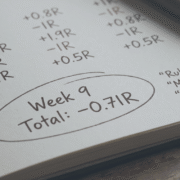
I started journaling properly when I realised I was making the same mistakes across different markets. Different instruments. Different days. The outcomes kept repeating.
The chart had changed but my behaviour hadn’t.
The chart had changed but my behaviour hadn’t.
At first, my journal was basic. Entry. Stop. Target. Result. It was useful, but shallow. It told me what happened, not why it happened.
The real shift came when I started writing how the trade felt.
Not emotions in a dramatic sense. Just simple observations. Rushed. Hesitant. Confident but distracted. Forcing it. Nothing profound on its own, but over time, patterns emerged.
I noticed something uncomfortable. Many of my worst trades looked fine technically. Structure was there. Levels made sense. On paper, they were valid.
My state wasn’t.
I was taking trades when I was bored. Or slightly annoyed. Or trying to make the session feel productive. None of that shows up on a chart.
The journal also revealed something unexpected. My best trades were quiet. No adrenaline. No urgency. Just execution. When a trade felt exciting, it was often because I was bending something without admitting it.
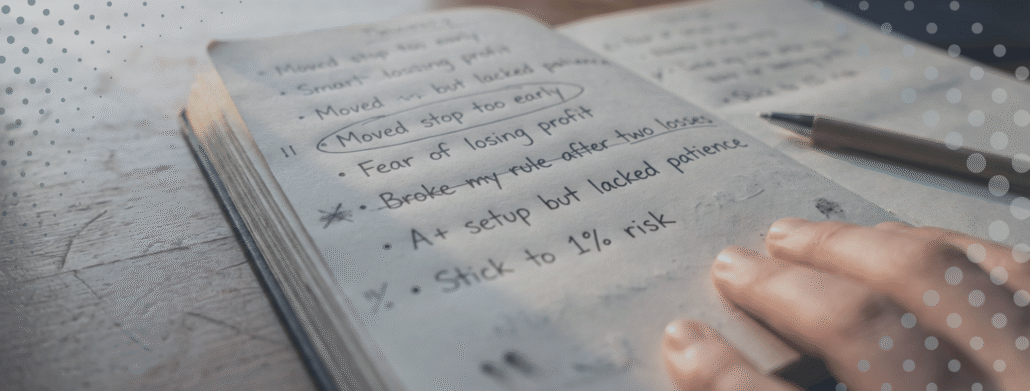
Over time, the journal became a mirror. Not of the market, but of me. It showed when I ignored my rules. When I sized up. When I traded after I should have stopped.
The chart never told me that story.
My best trades were quiet. No adrenaline. No urgency. Just execution.
One of the clearest lessons was this: most mistakes happen before the entry. In the mindset. In the intention. By the time I click buy or sell, the damage is often already done.
Now, some of my most important journal entries don’t include screenshots at all. They include sentences like trading to prove something, didn’t like the loss before this, should have stopped after the first win.
The journal taught me what no indicator ever could. That consistency isn’t about being right more often. It’s about recognising yourself in real time.
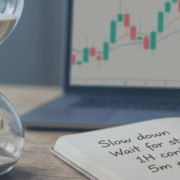
Charts are objective. They don’t lie. But they’re also incomplete.
The journal fills in the missing half. The human half.
If I could only keep one tool as a trader, it wouldn’t be a strategy or an indicator. It would be the journal.
The market keeps changing. My patterns repeat.
Trade well. Stay ordinary.