A loss hurts in an obvious way. The number is red, the journal entry writes itself, and the lesson, if there is one, is right there on the chart. You feel it, you log it, you move on.
A big win is different. It feels like a reward. It feels like proof. And that is exactly what makes it dangerous, because the damage it does is quiet, it lands later, and it rarely shows up in the same session that caused it.
A loss keeps you honest. A win rewrites the story
When a trade goes against you, the feedback is clean. You either broke a rule or the market did something you could not have known. Either way, you are alert. You go back to the chart, you check the setup, you ask what you could have done better. A loss puts you in a questioning frame of mind, and questioning is where the learning happens.
A big win removes the question. The account is up, the screenshot looks great, and the brain does the laziest thing available: it assumes the process was sound because the outcome was good. But outcome and process are not the same thing. You can follow every rule and lose. You can break every rule and win. A win that came from a broken process is the most expensive kind, because it teaches you to do the wrong thing again, with more conviction.
That is the trap. The loss makes you cautious about a good decision. The win makes you confident about a bad one.
A win that came from a broken process is the most expensive kind, because it teaches you to do the wrong thing again, with more conviction.
The euphoria tax
There is a cost to feeling great at the screen, and it gets paid on the next trade.
After a big win, position size starts to creep. The risk that felt sensible last week now feels timid. You are playing with the house’s money, or so the story goes, and the rules that kept you disciplined start to look like they were holding you back. You widen a stop you would normally respect. You take a setup that is a B at best because the last A worked out so well. You see structure that is not really there, because you want to see it.
None of this feels reckless in the moment. It feels like confidence. It feels earned. That is the euphoria tax, and the bill is usually a giveback that wipes out a chunk of the win and a bit of your composure with it.
The asymmetry nobody plans for
Most traders prepare for losing days. They think about drawdown, they size their risk, they have a number that tells them to stop. Almost nobody prepares for a winning one.
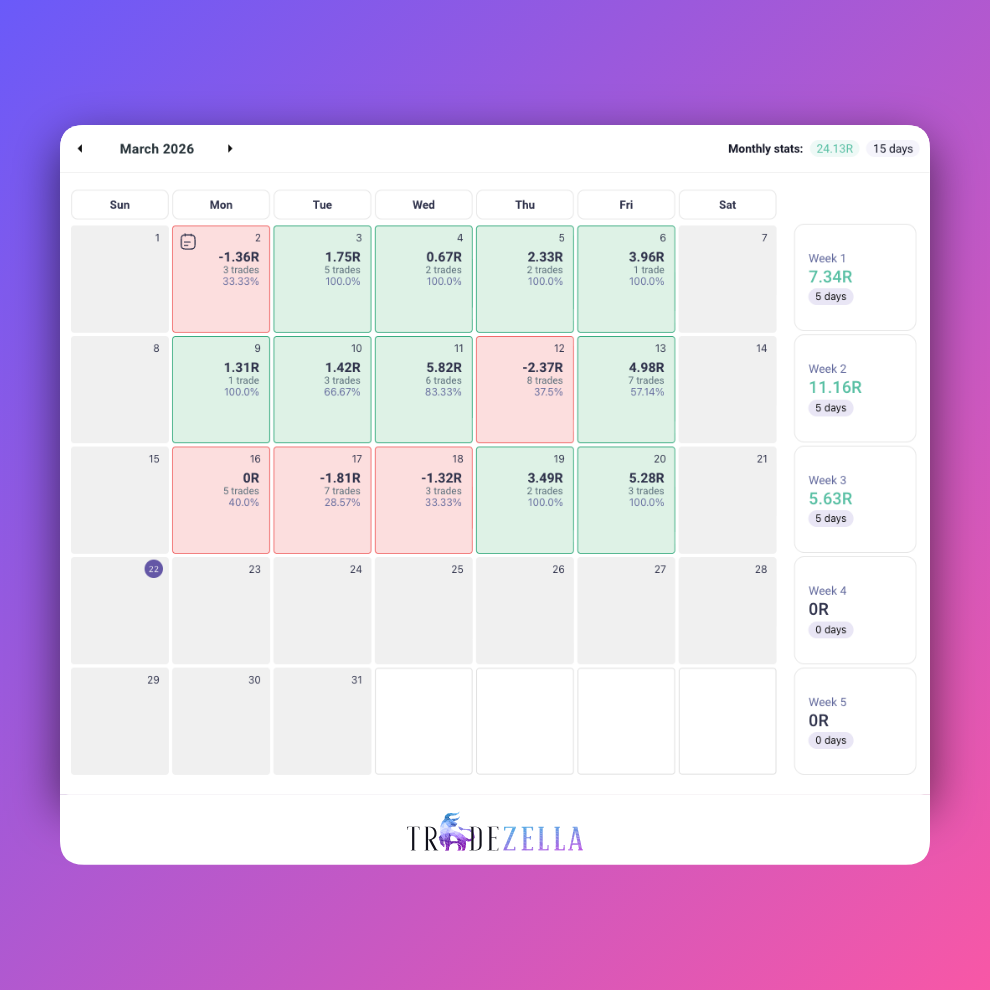
So the winning day catches them undefended. There is no rule that says what to do when you are up 8R and buzzing. There is no stop condition for feeling unstoppable. The discipline that exists for losses simply does not exist for wins, and the market is happy to collect from whichever side you left open.
This is the gap the Daily Trading Planner is built to close. It makes you write down your profit target, your trade limit, and the point you walk away before the session starts, so the decision to stop is already made while you are calm rather than improvised while you are buzzing. A win cannot talk you into one more trade if you set the limit before the win existed. The same planning that caps your drawdown on a bad day caps your giveback on a good one.
Treat the win as a data point, not a verdict
The fix is not to celebrate less or to feel nothing. It is to give the winning session the same scrutiny you give the losing one.
Log it properly. Not just the R-multiple, but the why. Did the process produce this, or did the market simply move your way? Be honest. A 6R day that came from patience and a clean setup is worth repeating. A 6R day that came from oversizing into a lucky run is a warning, not a template, and the journal should say so.
Then go back to base size. The single most useful habit after a big win is to return to your normal risk on the very next trade, as if the win never happened. The setup does not know your account is up. The market does not owe you a continuation. Sizing up because you are winning is the same error as sizing up to win back a loss, just wearing a nicer outfit.
And space it out. If a win has you feeling certain, that certainty is the signal to slow down, not speed up. Step away from the screen. Let the buzz fade before you place the next trade, because trades placed on a high are trades placed by someone who is not really there.
The single most useful habit after a big win is to return to your normal risk on the very next trade, as if the win never happened.
The quiet point
A good trader is not someone who never loses. It is someone whose process survives both outcomes. Losses test your discipline in a way you can see coming. Wins test it in a way you cannot, which is precisely why they are the more revealing of the two.
So the next time the account jumps and the screenshot looks great, treat it the way you would treat a loss. Calmly. With a question rather than a conclusion. The win is not the reward. Holding your process steady through it is.