Tag Archive for: Psychology

You sit down to review yesterday’s trade. The chart is still there. The entry, the exit, the result, all logged. But the part you actually need has gone. What were you thinking when you moved that stop? Why did you nearly close the position early? You can’t quite remember.

That critical lost in detail is the whole reason I journal. And it is why I care more about the notes than the numbers.

I use TradeZella for this. It is a solid platform, and most people know it for the stats: win rate, average R, all the dashboards. Useful, but not what this post is about. I want to talk about the Notes side, where you capture what you were thinking and feeling before, during and after a trade. Tags and Strategies are worth their own post another day. For now, here is the template I use and how I actually use it.

That critical lost in detail is the whole reason I journal.

Three sections, one job

My template has three parts. Screenshots, Trade Notes, and Post Trade Notes. Each one captures a different slice of the same trade, and together they let me rebuild the whole thing later without relying on memory.
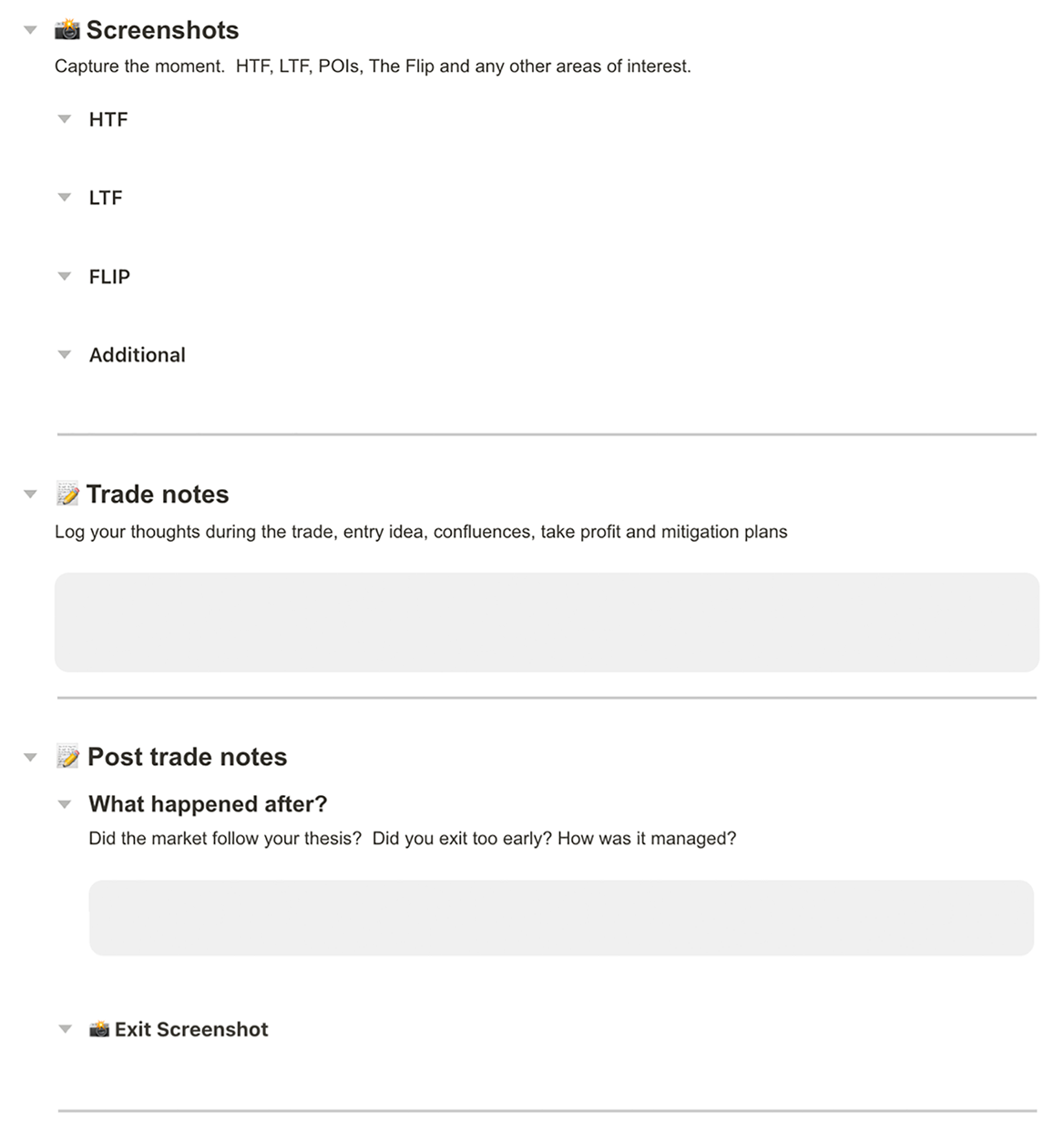
 

Screenshots: capture the moment

The first section is just images. I take a few as the trade develops, not all at the end.

A higher time frame shot (HTF, usually the 15 minute) to show the structure and the bias. A lower time frame shot (LTF, usually the 1 or 2 minute) for the detail of the entry. A zoomed-in shot of The Flip, because that is a key part of the setup I want to study again later. And an Additional slot for anything else worth keeping: the Path to Profit, a point of interest (POI) like a supply and demand zone (SNDR) or a fair value gap, whatever mattered on the day.

A fair value gap, by the way, is just the imbalance price leaves behind when it moves too fast to trade an area cleanly.

The reason I screenshot in the moment is that a chart looks completely different an hour later. Price has moved on, levels have been swept, and the thing that looked obvious at entry is buried. The screenshot freezes what I actually saw.

And this is the part most people skip. I write down how I am feeling.

Trade notes: the thinking and the feeling

This is the main section, and the one that does the most work.

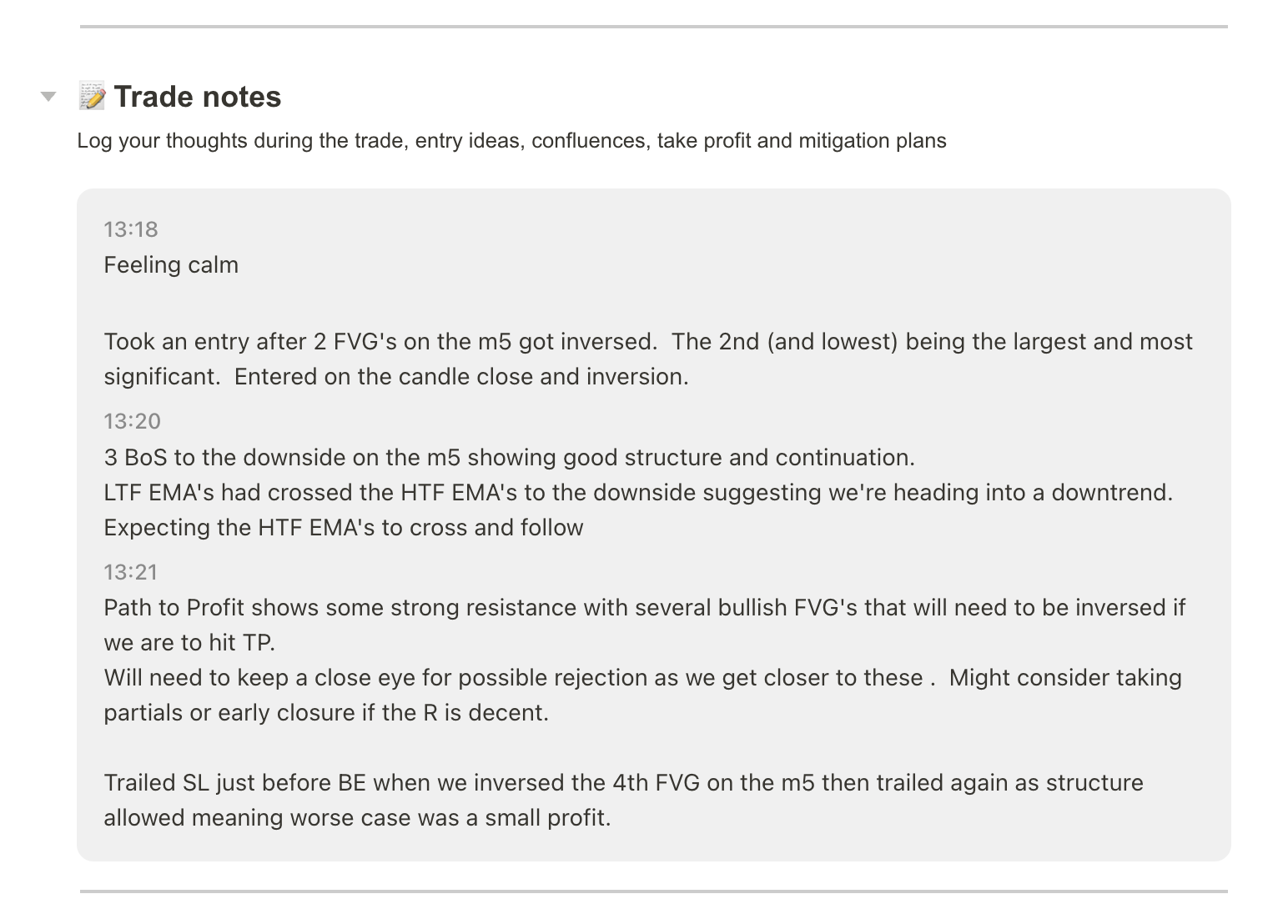
Here I write my thesis before I enter. The idea, the confluences, where I expect price to react, my take profit plan, and how I will manage the trade if it goes against me. Getting this down before entry matters, because it is the version of my thinking that has not yet been bent by an open position.

Then I keep adding to it as the trade runs. And this is the part most people skip. I write down how I am feeling.

That sounds soft. It is not. Emotion is where most of my mistakes start, and the only way to catch the pattern is to have it written down in your own words at the time. Read it back later and you can often see exactly where a feeling got in the way of a perfectly good setup. Sometimes it works the other way, and a note of unease turns out to be a warning sign you should have listened to.
Post trade notes: what actually happened

The last section is the review. I answer a few plain questions.

What happened after I took the trade? Did the market follow my thesis, or not? Did I exit too early, or enter too early? How did I manage it? Then the one that matters most: what would I do better next time, and if I could go back, what is the single piece of advice I would give myself?

This section also holds the exit screenshot. Did I hit my target, get stopped out, or close manually? I grab the final chart, and often what happened next too. Plenty of times I have hit TP1 and then watched price run on to take the previous day’s high. Capturing that teaches me something about where I am leaving money, and whether my targets are too conservative.

Capture it live, not from memory

I keep the journal open on my screen the entire session, next to the chart. I write as I go, in real time, as I enter and manage.

If you leave it until the evening, you do not really journal the trade. You are actually journalling your memory of the trade, which is a tidier, kinder, less accurate version of events. The hesitation gets smoothed over. The near-miss exit disappears. The thing you most needed to see is exactly the thing memory edits out.

You are actually journalling your memory of the trade, which is a tidier, kinder, less accurate version of events.

One trade, fully journalled, before the next

One rule I hold myself to. I do not take another trade until the first one is journalled and the lesson is captured.

Easier said than done, especially on an active session. But the moment you skip it “just this once,” the journal stops being a record and starts being a highlight reel. I treat finishing the journal as part of finishing the trade.

None of this is here to make me feel good about wins or bad about losses. It is here to make my behaviour visible. When I follow my rules, the results tend to take care of themselves. When I do not, the journal shows me exactly where. The chart only ever tells me what I did. The notes are the only place that remembers why.
Starting the day with a win feels good. Quietly so.

There’s a small lift you can sometimes feel after a clean trade closes in profit – confidence settling in, the day already feeling productive, the rest of the session looking easier than it did an hour ago.

That feeling is the problem.

Not the feeling itself. The way it nudges the next decision.

The win you didn’t earn the next trade with

A losing streak gets a lot of attention in trading education, and rightly so. Drawdown is loud. You notice it. The account balance flashes the warning at you, and most traders have at least one rule about stepping away when losses pile up.

An early win is quieter. It hides behind the fact that you did the right thing. You followed the plan, the setup played out, the entry was valid, and the trade closed in profit. There’s nothing to flag, nothing to log as a mistake.

But what often follows is a version of you that’s slightly more relaxed. Slightly more willing. The next setup looks a bit better than it should. The next stop sits a bit wider. The size creeps. You’re still doing the work, but the work is being done by someone who already feels like the day is going their way.

That’s where the damage starts.

The asymmetry nobody flags

Most traders are trained, by experience, to expect emotional drift after losses. Frustration, the urge to revenge trade, the temptation to chase. There are whole books on managing the downside of the emotional curve.

The upside of the curve gets much less attention. Overconfidence doesn’t feel like a problem in the moment. It feels like momentum. It feels like a green day in motion. And it often delivers a second decent trade before it delivers a stupid one.

Wins don’t feel like a risk. That’s exactly why they are one.

What I actually do after a clean morning trade

I treat an early win the same way I treat a string of losses.

Same protocol. Step away from the desk. Let the moment settle. Come back to the chart with the same eyes I started the session with.

A few specifics, because the abstract version of this is too easy to nod along to and then ignore:

  • I close the chart. Not minimise. Close.
  • I leave the room for at least fifteen minutes. Coffee, a walk, anything that isn’t a screen.
  • I don’t review the winning trade until the session is over. Reviewing it mid-session can quietly turn into validating it, and validating it can quietly turn into pattern-matching the next setup against it.
  • When I come back, I open the Daily Trading Planner first, not the chart. The plan for the day hasn’t changed. My state has. The plan is what will keep me honest during the rest of the session.

It’s a small set of actions. It works because it’s the same set of actions I use after a bad sequence. The brain doesn’t get to vote on whether the day is going well or badly. The protocol just runs.

The trade isn’t where the damage happens

A useful frame: most blow-up days don’t begin with a single bad trade. They begin with a slightly emotional trader making slightly worse decisions for a slightly longer stretch. The drift is the problem, not any one entry.

That’s true on the downside, where revenge trading is well-documented. It’s also true on the upside, where overconfidence does the same job with a friendlier face. By the time the giving-back trade hits, the conditions that caused it were set up trades earlier, when a win felt like permission.

The point of stepping away isn’t to dampen the win. The win is on the books. It already happened. The point is to protect the next decision from being shaped by a state that has nothing to do with the chart in front of you.

Sit with it

There’s a quiet bit of work in trading that nobody finds glamorous: noticing your own state and treating it as data. Not analysing it for an hour. Not journalling three pages about it. Just noticing, and then doing the small thing that the noticing demands.

After an early win, the small thing is to stop. Same as after losses. The session can wait. The market will still be there in fifteen minutes, and so will the next valid setup. If anything, you’ll see it more clearly.

The win is on the books. That’s enough for now.

Some weeks are easy to explain. This wasn’t one of them.

Week 12 split itself into two very different halves. Same markets, same approach, but completely different outcomes. Early on, it felt like nothing was really working. By the end, things had settled, and the week closed green. Not dramatically, just quietly solid.

Looking at the numbers, Monday finished flat at 0R across five trades. Tuesday and Wednesday followed with controlled losses of -1.81R and -1.32R. Then the shift came. Thursday returned +3.49R from two trades, and Friday added +5.28R from three trades. Net result, a green week, but that doesn’t quite capture how it felt midweek.

A Flat Start That Wasn’t Really Flat

Monday is a good place to start because it highlights something that’s been showing up more often. It was a flat day on paper, but not in reality. There was a solid unrealised gain early in the session that slowly got given back. Not through one mistake, just a gradual erosion.

That raises a useful question. Am I managing downside better than upside?

Right now, it looks like the answer is yes. Losses are controlled. Risk is respected. There’s no sense of things getting out of hand. But locking in gains, especially when they’re there early, is still inconsistent. Both sides matter, and at the moment they’re developing at slightly different speeds.

Midweek Pressure, Controlled but Not Comfortable

Midweek is where things got uncomfortable, but also where some real progress showed up. Three red days in a row if you include Monday’s flat result. Confidence dipped a bit, especially trading metals, which felt slightly out of sync. Entries would trigger, but follow through wasn’t there, and moves stalled just before they should extend.

It’s a frustrating environment. Not chaotic, just enough friction to wear you down.

The important part is what didn’t happen. There was no revenge trading, no increase in size, and no deviation from the plan. Losses were capped under 2R each day, consistently. That’s not luck, that’s structure holding up under pressure. It might not feel like a win in the moment, but it is. It’s what keeps a rough patch from turning into a damaging week.

Then Something Shifted

The second half of the week felt different, but not in a dramatic way. Trade frequency dropped, execution felt cleaner, and outcomes improved.

Thursday delivered +3.49R from two trades, and Friday followed with +5.28R from three. A five trade win streak closed things out. Fewer trades, better outcomes. That combination usually points to something subtle improving rather than anything major changing.

The Goldilocks Problem

If there’s one idea that stands out from this week, it’s this. Not all zones are worth trading, even if they look valid.

Earlier in the week, there was a tendency to engage with tighter zones. They looked clean and precise, but didn’t carry much weight in live conditions. Price would interact, but not respect them in a meaningful way, which led to getting tagged in and then chopped out.

Later in the week, the focus shifted toward more balanced zones. Areas with enough structure to matter, but also enough space for the trade to develop properly. Not too tight, not too broad. That change alone reduced the need to take marginal setups and improved follow through on the trades that were taken.

You can see it reflected in activity as well. Early in the week there were 5, 7, and 3 trades per day. Later, that dropped to 2 and 3. Less activity, better outcomes. That’s usually a sign that selection is improving.

The Quiet Win (That Doesn’t Show in R)

It would be easy to point to the green PnL as the highlight of the week. It wasn’t.

The real win was getting through three difficult days without any emotional escalation. No spiral, no urgency to recover losses, no shift into reactive trading.

That wasn’t always the case, and it’s the kind of progress that doesn’t show up in a results column but shows up everywhere else over time.

So What Actually Improved

Not the strategy. Not the market. Just execution.

Better zone selection, less overtrading, and continued discipline around risk. Profit protection still needs work, especially on days where gains are there early, but the foundation feels stronger.

Final Thought

Progress doesn’t arrive cleanly. It shows up in fragments.

You improve one side, like loss control, while another still needs work, like protecting profits. You go through rough patches, then things start to click, not perfectly, but enough.

Week 12 wasn’t perfect, but it was honest. And more importantly, it felt like progress that can actually be repeated.

There are some weeks where trading feels unusually clean. Not easy, exactly, but clean. The decisions are clearer. The setups stand out. Losses do not sting in the same way because everything sits inside the process.

Week 11 felt like that.

From Monday through Wednesday, the rhythm was strong. The week started green, stayed calm, and carried that tone through the first half of the session block. By Wednesday, it genuinely felt like things were clicking. Trades were being selected with more care. Marginal setups were passed on without much internal debate. There was less noise, less forcing, less need to be involved in every move.

In other words, I was sticking to the plan.

That showed up in a few obvious ways. There were fewer trades overall. Adherence to the trade planner was better. The early-week win rate was strong. More importantly, losing trades were handled without frustration. They happened, they were accepted, and then the focus returned to the next decision.

That emotional shift matters more than it might seem.

When a strategy has a real edge across a large sample size, individual trades lose a lot of their emotional weight. They still matter, of course, but they stop feeling personal. A loss becomes a business expense rather than a verdict. That was probably the biggest improvement this week. There was less attachment to each outcome and more trust in the process itself.

For the first few days, everything felt controlled. Measured. Ordinary, in the best sense of the word. That kind of trading is rarely dramatic, but it is usually where the best work gets done. It fits closely with the broader philosophy behind The Ordinary Trader: calm, process-led execution without hype or emotional exaggeration. 

Discipline is never permanent. It has to be renewed in real time.

The day discipline slipped

Then Thursday arrived and offered a useful reminder: discipline is never permanent. It has to be renewed in real time.

At around 9am, I had taken one trade and was already up +2.2R for the day. My daily target is 2R. So the correct decision was not complicated. The day had done its job. My job was to close the laptop and walk away.

I did not do that.

Instead, I started negotiating with myself. There was still plenty of session left. More movement might come. Another good setup could appear. None of that sounds especially reckless on paper, which is partly why this kind of mistake is so common. It rarely arrives as a dramatic impulse. More often, it shows up as a small, reasonable-sounding exception to a rule you already made for yourself.

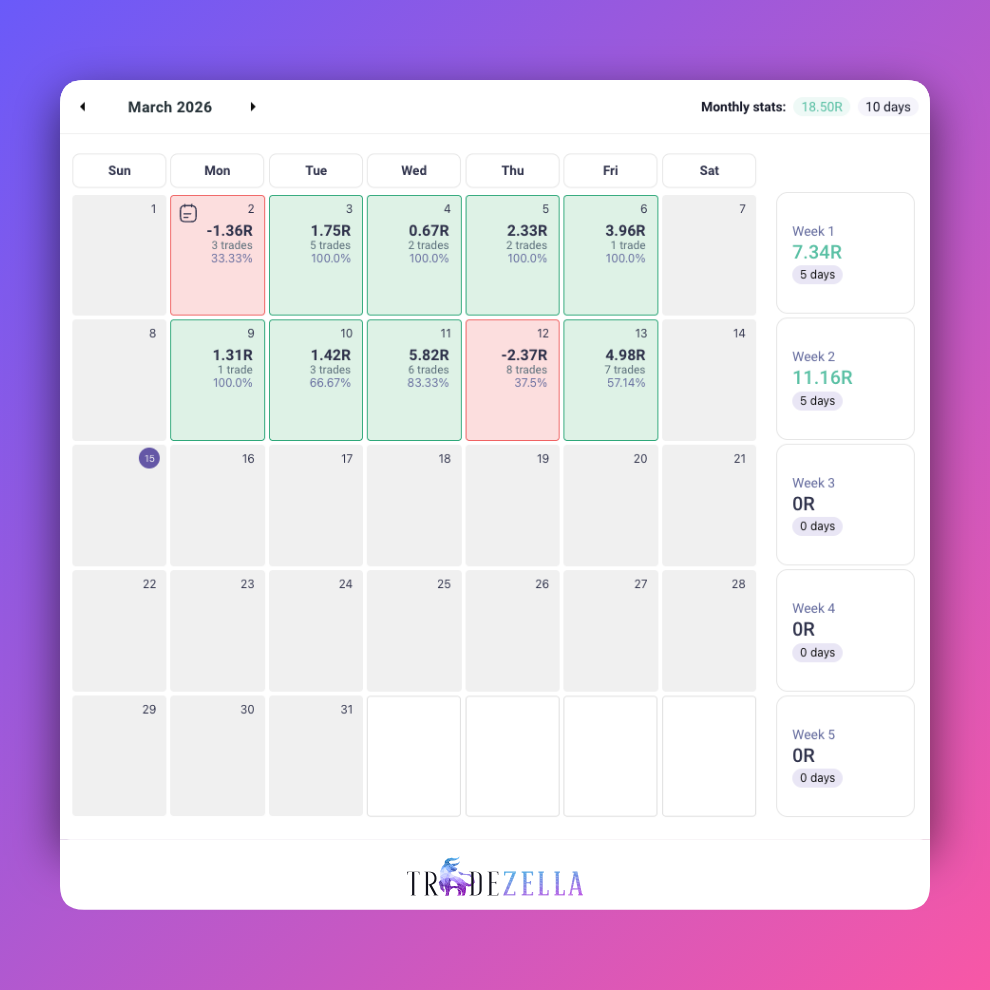
By the end of the session, I had turned a strong day into -2.37R.

That is a swing of more than  4R in the wrong direction, caused entirely by ignoring the framework that was supposed to protect the day once the target had been met.

That is the frustrating part. Not the loss itself, but how unnecessary it was.


Overconfidence rarely looks loud

While journaling the losses later that day, another pattern became clearer. Some of the decisions were sloppy. Not wildly reckless. Not completely detached from the plan. Just a little looser than they should have been.
That distinction matters.

The biggest trading mistakes are not always explosive. Sometimes they are subtle. A setup that is almost good enough. A management decision that is almost justified. A trade that gets taken not because it is clearly there, but because you have been in rhythm all week and quietly start to trust yourself a little too much.

That was probably the real issue on Thursday: overconfidence.

After several green days and a strong win streak, there was likely a slight relaxation in standards. Nothing dramatic. Just enough to matter. And in trading, just enough to matter is more than enough to do damage.

Honestly, that is one of the stranger parts of this work. Good performance can create its own risk. When you have been seeing the market well, the temptation is to believe that the next decision will also be sharp. But markets do not reward confidence on its own. They reward discipline, and discipline often means stopping while you still feel good.

Friday’s reset: protect the week

Friday felt different. Not because the market was easier, but because the lesson from Thursday was still close enough to shape the decisions.

Two strong trades appeared and both delivered more than 3R. In another mood, there might have been a temptation to squeeze more from them, trail more aggressively, and try to extract every last bit of movement available. And yes, in hindsight, they may have gone further.

But that was not the point.

After what happened the day before, the better decision was to lock in the profits and close the laptop.

Sometimes protecting the week matters more than maximising the day.

That can feel slightly unsatisfying in the moment. Traders are conditioned to think in terms of missed potential. Could it have run further? Could more have been made? Maybe. But that line of thinking is not always helpful. A well-managed green day does not become a bad one simply because a market moved further after you exited.

There is a lot of freedom in accepting that.

The real lesson from Week 11

Week 11 closed at +11.16R, which is super encouraging. But the most useful takeaway had very little to do with entries, analysis, or market reads.

It was about protecting gains.

Growing a trading account is not only about finding winning trades. It is about keeping the money when it is made. It is about refusing to turn good days into average ones, and average ones into red ones. It is about letting the positive asymmetry work in your favour over time.

That is not flashy, but it is the work.

Minimise losses. Protect gains. Let the edge compound.

The equity curve becomes more stable when losses stay contained and green days are allowed to remain green. Not every opportunity needs to be taken. Not every move needs to be captured. And not every strong day needs to be pushed further.

That last part is easy to forget. A lot of trading advice focuses on pressing advantage, scaling up, or making the most of momentum. There is a place for that. But there is also a quieter skill that matters just as much: knowing when enough is enough.

That was the lesson this week.

Not how to chase more, but how to keep what was already earned.

Minimise losses. Protect gains. Let the edge compound.

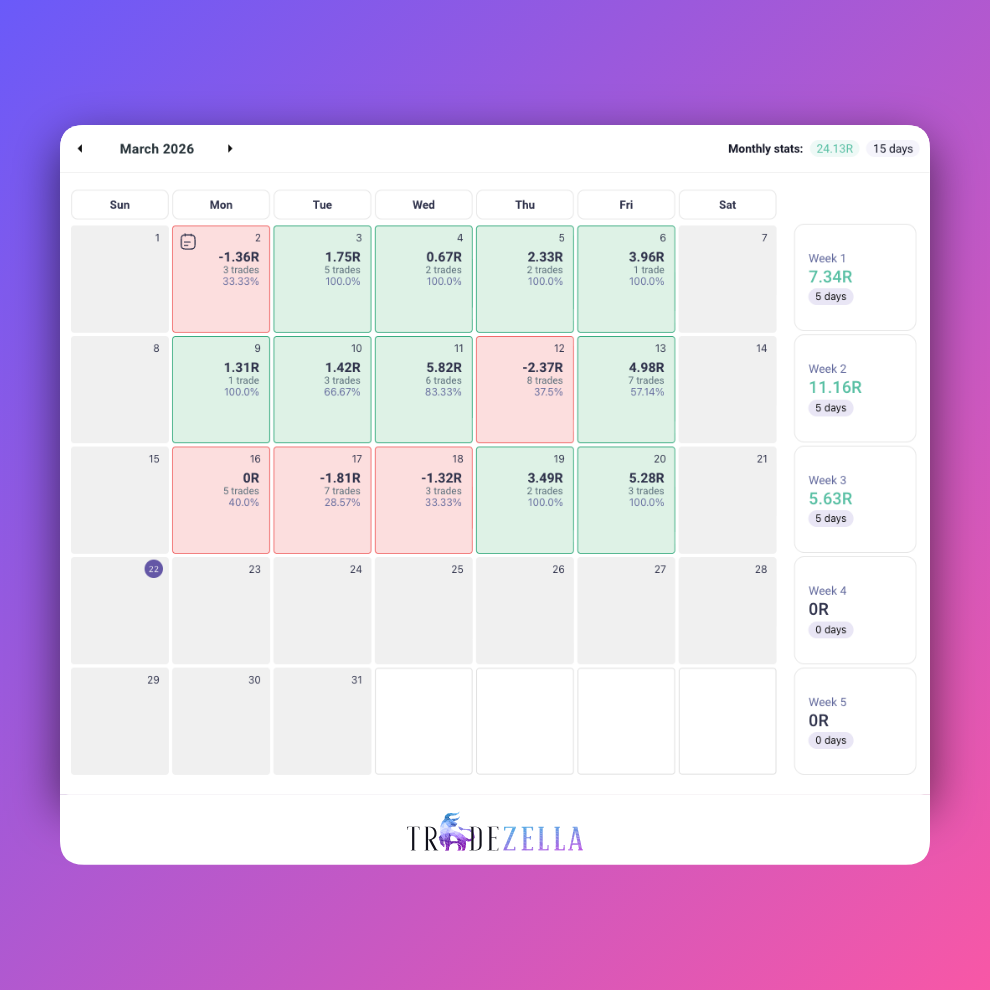
March 2 – March 6

Week 10 started with a red day.

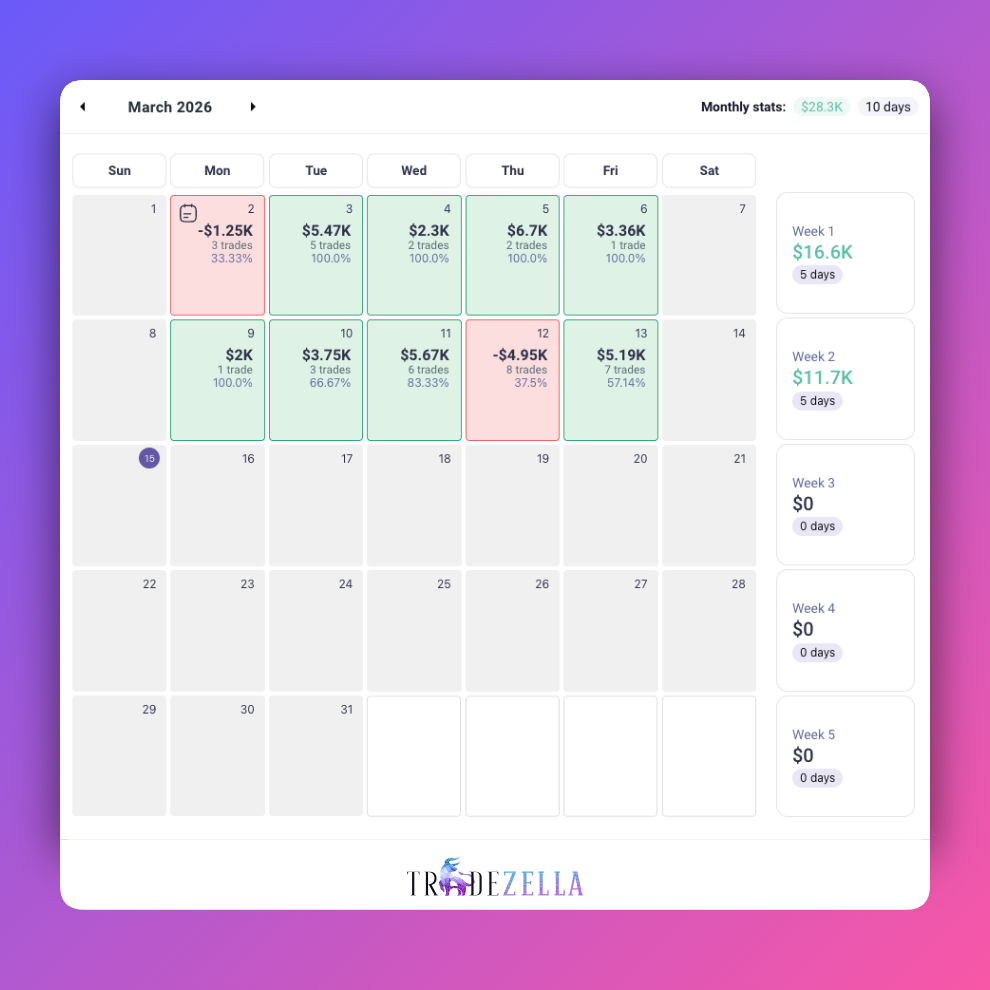
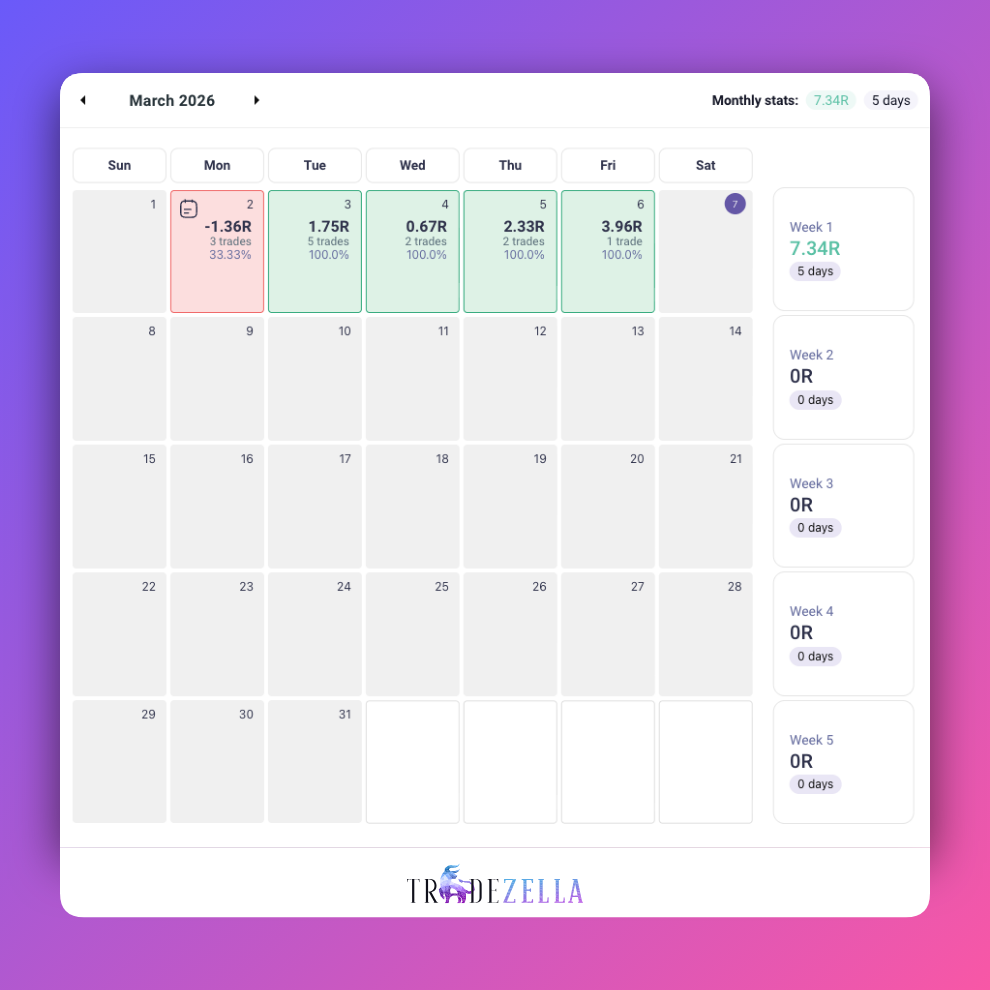
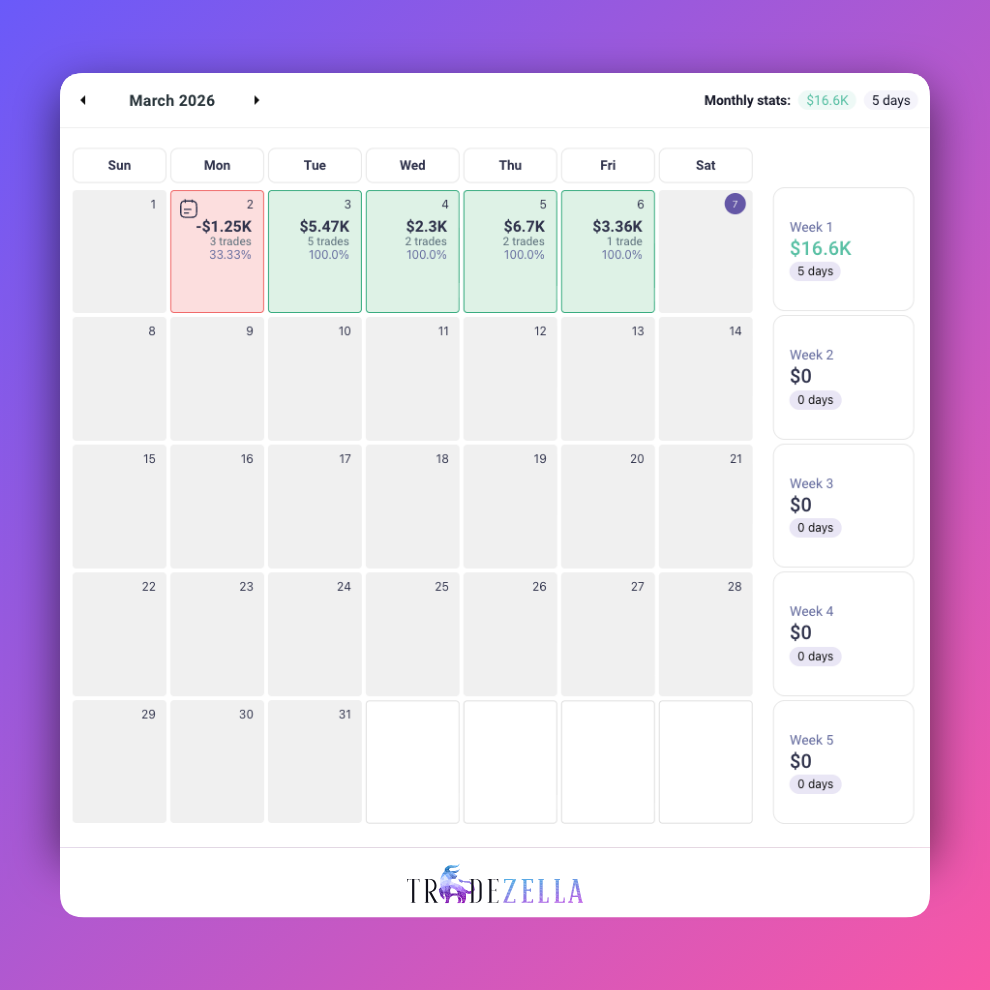
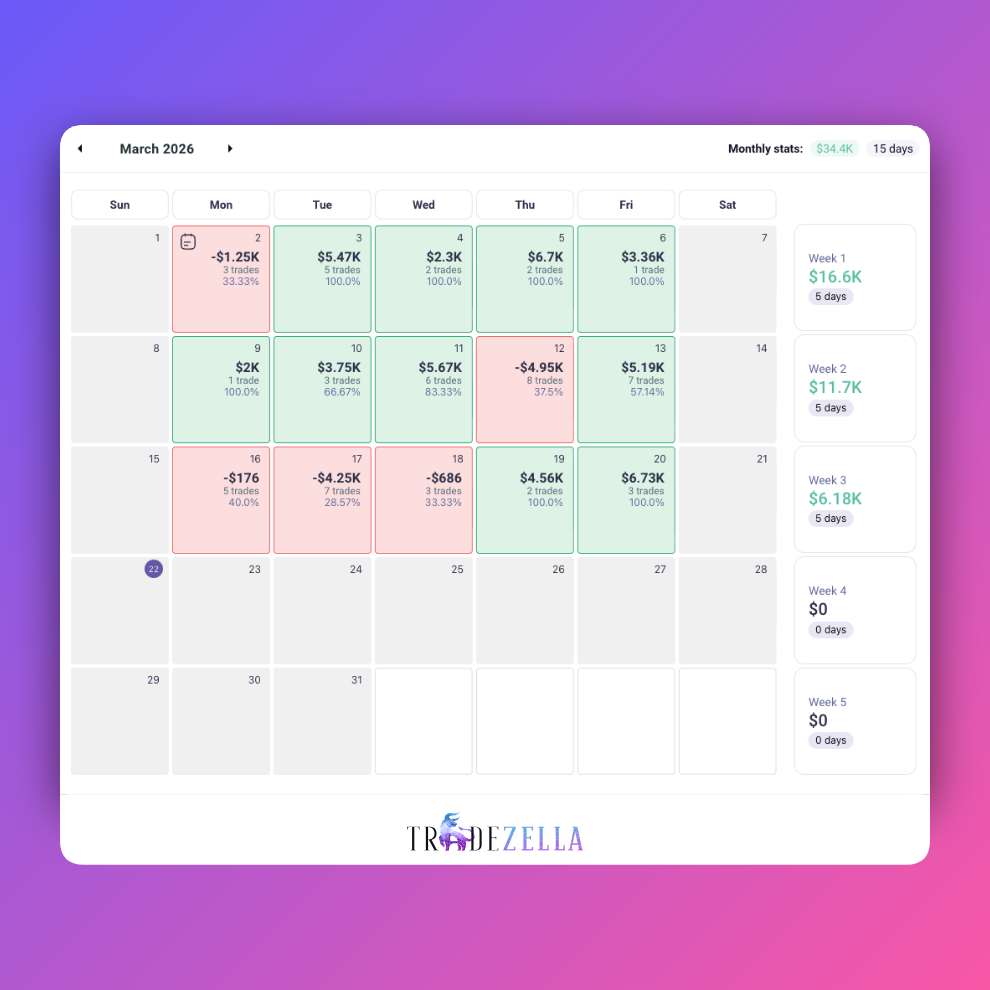
Not the ideal way to begin a new week or a new month. The session closed -1.36R (-$1.25K), which was a small confidence knock if I am honest. But the important thing is what happened next. I did not change the strategy. I did not try to force trades to make the loss back.

I simply stayed with the strategy and the trading plan.

What followed were four straight green days, each closing with a 100 percent win rate. Across those four sessions I put together a 10 trade win streak, bringing the week to +7.34R (+$16.6K).

The numbers are nice, but the bigger story this week was a shift in how I am reading the market.


A Timeframe Shift

This week I experimented trading less on the 15 minute TF for structure with 1 minute entries and began working with 1 hour structure and 5 minute entries.

The difference has been noticeable almost immediately.

Market structure simply feels more reliable. Breaks on the 5 minute and 1 hour charts carry slightly more weight due to their HTF mature. On the 1 minute chart, moves could feel a bit noisy and erratic, which made it easy to react to price movements that ultimately did not matter.

With the higher timeframe perspective, everything slows down.

Trades are now lasting four to six hours, compared with the 15 to 60 minutes that was typical before. That extra time creates a calmer environment. Instead of constantly searching for the next entry, there is space to observe price behaviour and manage trades more deliberately.

There is a trade off though. Holding positions longer means greater exposure to scheduled news events, which is something I now need to manage more carefully.

Quality Over Quantity

Another clear change is the number of trades.

When I was working from the 1 minute chart it was easy to take five to eight trades per day, which sometimes led to rushed decisions and lower quality setups.

With the new approach, opportunities appear less frequently. But when they do, the structure is clearer and the reasoning behind the trade is stronger.

Risk to reward is improving as well. Previously many trades capped out around 1.5R, but this week I captured a 4R trade, something that was far less common under the faster approach.

The result is straightforward.

Fewer trades.
Better trades.

The Key Takeaway

Week 10 reinforced an important lesson.

Speed creates noise.
Slowing down creates clarity.

The move to higher timeframe structure has changed the rhythm of the trading day. Decisions feel calmer, setups feel more intentional, and the overall environment is far less reactive.

Week 10 closed +7.34R (+$16.6K), but the more important shift is in the process.

The charts are quieter.
The decisions are calmer.
And the trades carry more weight.

There is solid science behind the idea that your ability to make good decisions changes across the day. It is one of the most studied topics in psychology, behavioural economics, and neuroscience.

Put simply:

  • The brain has limited self-regulation resources
  • Using them repeatedly makes them temporarily weaker
  • Fatigue changes risk perception and impulse control

For traders, that is not abstract theory. That is revenge trading. That is FOMO. That is dropping your entry standard from A+ to “this will do.”

Let’s unpack it.

Ego Depletion and Decision Fatigue

Researchers like Roy Baumeister proposed that willpower and disciplined thinking draw from a finite mental resource.

Every act of:

  • Resisting impulse
  • Analysing uncertainty
  • Managing emotion
  • Waiting for confirmation
  • Passing on a mediocre setup

…uses some of that fuel.

As the day progresses, the tank runs lower. When depleted, people tend to:

  • Choose easier options
  • Avoid complex thinking
  • Act more emotionally
  • Seek immediate reward
  • Abandon previously agreed rules

Not because they want to. Because the brain is tired. In trading terms, that shift is subtle but dangerous.

An A+ setup becomes an A.

An A becomes a B+.

A B+ becomes “close enough.”

And “close enough” is where consistency dies.

System 1 vs System 2

In Thinking, Fast and Slow, psychologist Daniel Kahneman describes two modes of thinking:

System 1 → fast, automatic, emotional

System 2 → slow, effortful, logical

Trading well requires System 2.

Waiting. Calculating. Filtering. Ignoring noise.

But as mental energy drops, the brain defaults to System 1.

Which means later in the session you are more likely to:

  • Revenge trade after a loss
  • Close winners early out of fear
  • Oversize to “make it back”
  • Ignore missing confirmation
  • Rationalise weak entries

It feels justified in the moment.

It rarely is.

The Judge Study

One of the most famous demonstrations of decision fatigue looked at Israeli judges.

Researchers found:

  • Early in the day → more thoughtful, favourable rulings
  • Right before breaks → harsher, default decisions
  • After food and rest → decision quality improved again

Judgement changed based on mental fatigue.

Not morality. Not intelligence. Not experience.

Energy.

Now apply that to a trader four hours into screen time, three trades in, slightly red, watching price move without them.

The conditions are perfect for a poor decision.

What Happens Biologically?

As cognitive load builds:

  • Attention declines
  • Emotional regulation weakens
  • The prefrontal cortex (responsible for discipline and planning) becomes less effective
  • Impulse systems become louder

So discipline literally becomes harder.

You do not suddenly become reckless.

You become slightly less precise.

And in trading, slight erosion compounds.

How This Shows Up On Your Chart

This is what mental fatigue looks like in practice:

  • Patience drops
  • Rule adherence softens
  • Risk taking increases
  • Urgency appears where none exists
  • Entry standards slip

You do not say, “I am fatigued.”

You say:

“Maybe this one is ok.”

That sentence has probably cost more traders money than any indicator ever has.

The Uncomfortable Truth

By the time most traders take their worst trade…

They are already mentally depleted.

It is rarely the first trade of the day.

It is often the third.

Or the one taken after trying to claw back -2R.

Not a strategy problem.

An energy problem.

How Professionals Protect Themselves

Professionals do not rely on motivation.

They design around biology.

They:

  • Limit decisions per day
  • Use a daily trading planner.
  • Pre-plan actions before the session
  • Use checklists
  • Automate exits where possible
  • Stop at fixed loss limits
  • Trade fewer, higher quality opportunities

They reduce how often System 2 has to fire.

They preserve decision energy for when it matters most.

Why This Matters If You’re Building Consistency

If you are building a structured, rules-based approach to trading, this is gold.

Performance deterioration is often biological, not intellectual.

You do not need more knowledge.

You need fewer decisions.

Fewer trades.

Higher standards.

Defined stop times.

Hard daily limits.

Because consistency is not just about strategy.

It is about protecting your brain from itself.

How was your week?

Mine finished green. But it did not start that way.

Week 6 closed at +1.27R (+$2.49K). A positive week on paper. But the journey there was far from smooth.

After finishing the previous week on a red Friday, the weakness carried straight into this one. Monday was modestly green at +0.38R, but Tuesday and Wednesday did real damage. By the end of Wednesday I was sitting at -6.65R for the week.

Too many basic mistakes.

There were trades that offered profit. I had opportunities to pay myself. Instead, I held for extended targets that were not aligned with structure. Winners came back. Stops were hit. Frustration crept in.

It was time to pause and reset.

From Thursday onward the shift was obvious.

Structure was simplified.
Zones were tighter.
EMA alignment came back into the decision process.
Profit expectations became practical again.

No hero trades. No forcing it.

Thursday printed +2.09R.
Friday followed with +5.82R.

Two strong, controlled days turned a deep hole into a positive week. Not through aggression. Not through revenge trading. Through discipline.

Nothing new was added. I simply returned to the framework that already works.

There is also an important context point. I had surgery on Monday and traded the early part of the week while still under medication. Unsurprisingly, decision quality was not sharp. Consider that lesson learned. If I am not physically or mentally 100%, I do not trade. Simple.

Action Items Going Forward

  • Pay myself sooner. Take sensible partials when offered.

  • Keep zones tight. Mark entries on M1, validate structure on M15.

  • Require clear EMA alignment across timeframes.

  • Slow down. If journaling slips, I am trading too much.

  • No trading unless physically and mentally sharp.

Boring fixes.

Immediate improvement.

Exactly how it should be.

Trading Should Be Ordinary

There is a quiet misconception at the heart of modern trading culture. Many people arrive at the markets searching for something different from ordinary life. They want fast moves, big wins, and the rush of adrenaline that comes from watching price surge in their favour. Trading is marketed as excitement. As freedom. As a shortcut to something extraordinary.

That expectation does more damage than most beginners realise.

Because the moment trading feels exciting, something has usually already gone wrong.

In the early stages, excitement feels harmless. You place a trade and price starts moving quickly. Your heart rate rises. A win feels incredible. A loss feels personal. The emotional swing creates the illusion of engagement. It feels like focus. It feels like intensity.

But it is neither.

It is noise.

Excitement does not sharpen decision making. It distorts it. Under its influence, traders begin to deviate from plans they carefully built when calm. They hold positions longer than their rules allow. They increase size without fully acknowledging the added risk. They take setups that do not meet their usual standards.

the moment trading feels exciting, something has usually already gone wrong.

Nothing about the strategy changed. Only the feeling did.

And feelings are unreliable risk managers.

The traders who endure for years tend to describe their sessions very differently. There is no drama in their routine. No rush. No theatre. They sit down at the same time each day. They review the same markets. They execute within the same framework. Most trading days look remarkably similar to the one before.

To an outsider, it can seem repetitive. Even dull.

It is not a lack of passion. It is professionalism.

When a trade works, there is no surge of triumph. The outcome was always part of the statistical expectation. When a trade fails, it is recorded, reviewed, and filed away. There is no spiral of frustration and no grand story attached to it. It is simply another data point in a long series.

This emotional neutrality is not accidental. It is cultivated.

Excitement is expensive in trading. It encourages impatience. It fuels reactive decisions. It creates the illusion that this trade, right now, is more important than the next hundred that will follow. It convinces you that you must act, that you must participate, that you must prove something.

You do not.

Consistency in trading is not built on intensity. It is built on repetition. The same preparation. The same criteria. The same risk management. Over and over again.

From the outside, ordinary trading does not make compelling headlines. There are no dramatic screenshots. No wild equity swings. No visible emotional highs and lows. There is simply process. Structure. Restraint.

But boring is stable.

Boring is repeatable.

Boring is where edge lives.

Trading should not feel like a performance. It is not a game and it is not a test of confidence or intelligence. It is work. Quiet work, done methodically, without seeking emotional stimulation.

Trading should not feel like a performance. It is not a game and it is not a test of confidence or intelligence. It is work. Quiet work, done methodically, without seeking emotional stimulation.

That may sound less glamorous than the promises that pull people into the markets. It is meant to.

Trading should be ordinary.

Not because ordinary is small, but because ordinary is sustainable.

Most people come into trading looking for excitement. Fast moves. Big wins. Adrenaline. That expectation is usually where things start to go wrong.

The best trading days I’ve had are forgettable. No drama. No stories worth telling. Just routine.

I sit down at the same time. I look at the same markets. I follow the same process. There’s nothing clever or impressive about it.

When a trade works, it doesn’t feel amazing. It feels expected. When it doesn’t, it’s accepted, logged, and left alone.

Emotion is expensive in trading. Excitement leads to oversizing. Frustration leads to overtrading. Boredom, it turns out, is much safer.

As my routine became more consistent, I felt less during the session. That isn’t a flaw. That’s the point.

I’m not trying to read the market in real time. I’m trying to execute a process I’ve already thought through. The thinking happens before the session. During the session, I follow instructions.

Repetition builds trust. Trust in the setup. Trust in the risk. Without that, every trade feels like a gamble rather than a decision.

Most deviations start small. A slightly early entry. A slightly wider stop. In the moment, they don’t feel like mistakes.

They show up later in the journal. Not because the trade lost, but because the routine broke.

Boring trading looks the same every day. Same risk. Same rules. Same response to wins and losses. No improvisation.

If I feel excited, something is off. If I feel rushed, I stop. If I feel the urge to make something happen, I’m already done for the day.

This isn’t about removing personality. It’s about removing noise. The market provides enough uncertainty on its own.

Trading shouldn’t feel like a highlight reel. It should feel like work. Quiet, repetitive, sometimes dull work.

And that’s exactly why it works.

For a long time, I thought consistency meant winning more trades. More green days. Fewer red ones. If I could just improve my hit rate, everything else would take care of itself.

That isn’t what changed my results.

What changed everything was learning how to lose.

Not avoiding losses. Not trying to eliminate them. But controlling how much damage they were allowed to do.

Losses are part of the job. Every strategy has them. Every trader experiences them. The difference isn’t whether you lose. It’s how expensive those losses become.

Early on, my losing days were messy. One loss turned into two. Two turned into “just one more.” By the end of the session, the damage had very little to do with the original setup.

The trades weren’t the problem.

My reaction to them was.

When I reviewed my journal, a pattern stood out. My best weeks didn’t have fewer losses. They had smaller ones. Cleaner ones. Losses that stopped where they were supposed to stop.

That observation reframed everything.

The moment I accepted that losing is unavoidable, my focus shifted. Away from how do I win more, and toward how do I protect myself when I’m wrong. That single question changed my behaviour.

I started predefining risk before every trade. Not as a suggestion, but as a boundary. I knew exactly what a mistake could cost me, and I accepted it in advance.

I also learned to stop trading after bad sequences. Not because the market was broken, but because I was. Two losses in a row didn’t mean my edge had disappeared. It meant my decision-making was under pressure.

That distinction mattered.

Losing better looks boring. Smaller size. Fewer attempts. Earlier stops. It doesn’t feel heroic. There’s nothing exciting about walking away after a controlled loss.

But it compounds.

A bad day becomes manageable. A bad week becomes survivable. A bad month no longer threatens to undo everything that came before it.

Consistency isn’t built on your best days. It’s built on the days where things don’t work. How you behave when you’re wrong is the real edge.

I still have losing days. Plenty of them. The difference now is that they don’t spill over. They don’t leak into tomorrow.

Winning more is nice. Losing better is necessary. And once you get that part right, consistency tends to follow.